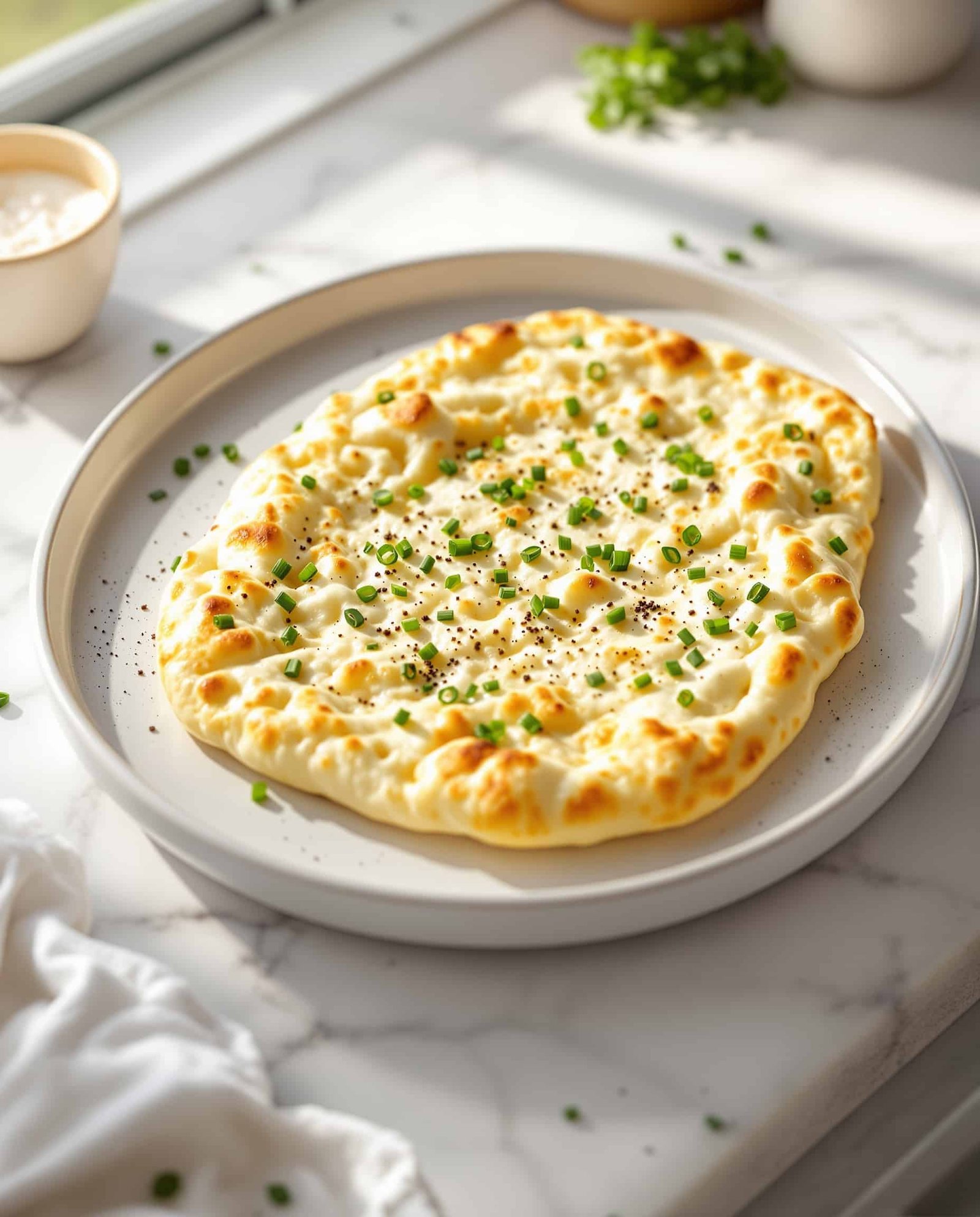
Let’s be honest, trying to lose weight can feel like a constant battle against bland food and confusing advice. You’re looking for something satisfying, easy, and genuinely helpful, not another fad diet gimmick. That’s where this Cottage Cheese Flatbread comes in. It’s a surprisingly versatile, high-protein base that can revolutionize your healthy eating, offering a simple solution to the ‘what should I eat?’ dilemma when you’re aiming for a calorie deficit. We’re not here for magic pills; we’re here for real food and real understanding. This recipe isn’t just about what you eat, but *why* it works for weight loss.
| Prep Time | 5 minutes | Cook Time | 30 minutes |
| Servings | 2 | Calories | 225 kcal |
Ingredients
- 2 cups (450g) low-fat cottage cheese (small curd preferred)
- Pinch of salt (optional)
Recommended Tools You’ll Need
| Tool | Why You Need It |
|---|---|
| Food Processor | Essential for achieving that super smooth, blendable cottage cheese texture for a pliable flatbread. |
| Baking Sheet | Provides the surface for baking your flatbread evenly. |
| Parchment Paper | Prevents sticking and makes it easy to remove the flatbread without tearing. |
| Spatula or Offset Spatula | Helps you spread the cottage cheese mixture evenly for consistent baking. |
Instructions
- Preheat your oven to 375°F (190°C) and line a baking sheet with parchment paper.
- In a food processor, add the cottage cheese. Blend until completely smooth and creamy, scraping down the sides as needed. This step is crucial for a smooth flatbread texture.
- Carefully spread the blended cottage cheese onto the prepared baking sheet in a thin, even layer, about ¼ inch thick. You can shape it into a rectangle or circle.
- Bake for 20-30 minutes, or until the flatbread is firm to the touch and the edges are lightly golden brown. Baking time may vary slightly depending on your oven and the thickness of your flatbread.
- Remove from the oven and let it cool on the baking sheet for at least 10 minutes before gently peeling it off the parchment paper. This helps it firm up and prevents tearing.
- Once cooled, slice and enjoy immediately, or prepare for storage. Top with your favorite healthy ingredients!
Calorie Reality
At 225 calories per serving, this cottage cheese flatbread provides a substantial, protein-rich base. For someone aiming for a typical 1500-2000 kcal daily budget, this makes a fantastic light meal or a very filling snack, leaving plenty of room for other nutrient-dense foods throughout your day.
About Your Daily Budget: Your Total Daily Energy Expenditure (TDEE) is the total number of calories your body burns in a day. To lose weight, you need to consistently consume fewer calories than your TDEE, creating a calorie deficit.
Diet Compatibility
Compatible with: Low-Carb, Keto (with careful topping choices), High-Protein, Mediterranean (with appropriate toppings), Vegetarian
Not compatible with: Vegan, Dairy-Free, Paleo
Warning: Mixing Diets: While this recipe is adaptable, blindly mixing different diet strategies can be counterproductive and sometimes even harmful. For example, trying to be ‘low-carb’ but then eating high-fat without understanding your overall calorie intake can lead to weight gain due to excessive calories (lipogenesis). Stick to one primary, evidence-based approach that aligns with your health goals and consult a qualified professional if you’re unsure.
Expert Tips
For the best texture, ensure your cottage cheese is blended completely smooth – any lumps will result in a grainy flatbread. Don’t be afraid to spread it thin; a thinner layer bakes crispier. While excellent for weight loss due to its protein content, remember portion control. Pair it with loads of non-starchy vegetables to boost fiber and micronutrients without adding many calories. Always prioritize whole, unprocessed toppings to keep your calorie goals in check.

Macros Breakdown
This flatbread is a protein powerhouse, delivering a significant 36g per serving. This high protein content is crucial for weight loss because it promotes satiety (feeling full), helps preserve muscle mass in a calorie deficit, and has a higher thermic effect than carbs or fat. The low fat and carb content makes it incredibly versatile for various dietary approaches.
Nutrition Information (per serving)
| Calories | Protein | Carbs | Fat | Fiber |
|---|---|---|---|---|
| 225 kcal | 36g | 10g | 4g | -g |
Key Terms Explained
| Term | Explanation | Why it matters here |
|---|---|---|
| Calorie Deficit | Consuming fewer calories than your body burns in a day. This is the fundamental principle for weight loss. | This flatbread is designed to be low in calories, helping you achieve a deficit without feeling deprived. |
| Satiety | The feeling of fullness and satisfaction after eating, which helps control hunger and reduce overall calorie intake. | The high protein content in cottage cheese significantly boosts satiety, keeping you full longer. |
| Thermic Effect of Food (TEF) | The energy expended by your body to digest, absorb, and process the nutrients from your food. | Protein has the highest TEF, meaning your body burns more calories processing it compared to carbs or fats. |
| Lipogenesis | The metabolic process by which the body synthesizes fatty acids and stores them as triglycerides, primarily in adipose tissue (fat stores). | Important to understand that even ‘healthy fats’ in excess can lead to lipogenesis if you’re not in a calorie deficit. |
The Truth About This Recipe
The Truth About This Recipe: No food, not even a high-protein cottage cheese flatbread, will magically make you lose weight. This recipe is an excellent tool because it’s high in protein and relatively low in calories, making it easier to achieve and maintain a calorie deficit. But if you pile it high with cheese, bacon, and mayonnaise, you’ll negate the benefits. Weight loss comes down to consistent choices that keep you in that deficit over time, coupled with adequate protein, fiber, and overall nutrition. This flatbread helps you make one of those smart choices.
Move Your Body
This flatbread comes in at 225 calories per serving. To put that into perspective, a brisk 30-minute walk burns roughly 150-200 calories (depending on your weight). So, enjoying this flatbread and then getting some movement in, even a gentle walk, is a fantastic way to support your weight loss journey.
Delicious Variations
For a keto-friendly option, ensure your cottage cheese is low-carb and top with high-fat, low-carb ingredients like avocado, smoked salmon, or a small amount of full-fat cheese. For a low-carb take, simply stick to the recipe and load it with lean protein and fresh veggies. To lean into a Mediterranean diet, top your flatbread with roasted red peppers, olives, feta, and a drizzle of extra virgin olive oil. The base remains versatile for many dietary styles.
Healthier Alternatives
Instead of traditional wheat-based flatbreads, this cottage cheese version significantly cuts down on refined carbohydrates, which can often lead to blood sugar spikes and subsequent crashes. If you want to boost fiber, blend in a tablespoon of psyllium husk powder with the cottage cheese (ensure adequate hydration). For a lower sodium option, choose a no-salt-added cottage cheese. The ‘why’ for these alternatives is always about nutrient density, blood sugar control, and managing overall calorie and sodium intake effectively.
Serving Suggestions
Top your cooled flatbread with a generous smear of hummus, sliced cucumber, cherry tomatoes, and a sprinkle of everything bagel seasoning for a light lunch. Alternatively, use it as a ‘pizza base’ with a thin layer of tomato paste, a sprinkle of low-fat mozzarella, and plenty of sautéed mushrooms and spinach. A warning: avoid loading it with high-calorie deli meats, excessive cheese, or creamy sauces, as these can quickly turn a healthy meal into a calorie bomb, sabotaging your weight loss efforts.
Storage Instructions
Once completely cooled, store the cottage cheese flatbread in an airtight container in the refrigerator for up to 3-4 days. You can reheat it gently in a toaster oven or air fryer for a few minutes until warmed through and slightly crispy. It can also be frozen for up to 1 month; thaw overnight in the fridge before reheating. For best results, wrap individual pieces in parchment paper before freezing to prevent sticking.
Frequently Asked Questions
Can I use full-fat cottage cheese?
Yes, but be aware it will significantly increase the calorie and fat content per serving. For weight loss, low-fat cottage cheese is generally a better choice to keep calories lower.
Why is protein so important for weight loss?
Protein helps you feel full longer, reduces cravings, and helps preserve muscle mass when you’re in a calorie deficit. This is crucial because muscle burns more calories at rest than fat.
How does this flatbread contribute to a calorie deficit?
By providing a high-protein, relatively low-calorie base, it helps you feel satisfied on fewer calories compared to many traditional bread options, making it easier to eat less overall.
Can I make this dairy-free?
Unfortunately, no. The recipe relies entirely on cottage cheese. There isn’t a direct dairy-free substitute that would yield the same flatbread texture and nutritional profile.
Is this a ‘magic’ weight loss food?
Absolutely not. There’s no such thing as a ‘magic’ food for weight loss. This flatbread is a smart, nutrient-dense tool that makes it easier to manage your calorie intake and stay satiated, which are key principles for sustainable weight loss.
Conclusion
There you have it: a simple, honest, and effective recipe for Cottage Cheese Flatbread that actually supports your weight loss goals. It’s not about deprivation; it’s about making smarter, more informed choices that leave you feeling satisfied and nourished. Remember, I’m not a doctor, but I do read the science, and the science is clear: sustainable weight loss comes from understanding your body’s needs, maintaining a consistent calorie deficit, and prioritizing nutrient-dense foods, especially protein. This flatbread is a delicious step in that direction. Go forth, experiment with healthy toppings, and build a relationship with food that empowers you, rather than frustrates you. You’ve got this.