Collagen Vs Gelatin

… Learn more
Collagen and gelatin are two closely related proteins that play essential roles in health and wellness. While both derive from animal connective tissues, they differ in structure and application. Understanding collagen vs gelatin helps consumers make informed choices for dietary and supplemental needs. This article explores their differences, benefits, and best uses.
You may also enjoy our protein gelatin recipe.
Collagen is the most abundant protein in the human body, providing structure to skin, bones, and joints. Gelatin, cooked form of collagen, widely used in food and pharmaceuticals. Both offer unique advantages, but their distinctions matter for specific health goals. Let’s dive deeper into what sets them apart.
Collagen is a fibrous protein naturally found in skin, tendons, and bones. It supports tissue strength and elasticity. When collagen is heated or processed, breaks down into gelatin, which has a different molecular structure. This transformation alters how each functions in the body and in products.
See also: gelatin powder in desserts.
Gelatin dissolves in hot water and forms a gel when cooled, making it ideal for culinary uses. Collagen supplements, like hydrolyzed collagen peptides, remain soluble and are easily absorbed. Both provide amino acids, but their bioavailability and applications vary significantly.
Hydrolyzed collagen is further broken down for better digestion. It’s often used in powders and supplements. Gelatin, however, requires preparation to be effective. Knowing these differences helps determine which form best suits individual needs.
If you enjoyed this recipe, you might also like our perfect supplements gelatin.
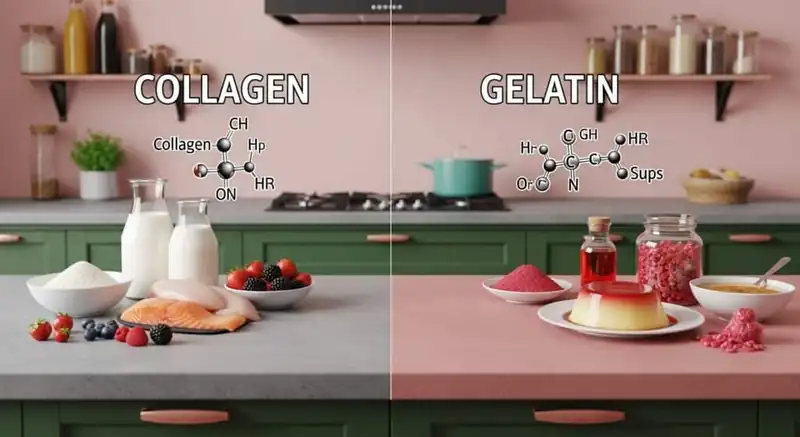
Choosing between collagen and gelatin depends on intended use. Collagen supplements support skin, hair, and joint health without altering texture. Gelatin, however, preferred in recipes requiring thickening or gelling. Their distinct properties influence effectiveness in different scenarios.
For those seeking quick absorption, hydrolyzed collagen is optimal. Gelatin’s cooking requirements make it less convenient for daily supplementation. Both support protein intake, but collagen’s versatility in beverages gives it an edge for some users.
Looking for something similar? Try our gelatin jello.
Understanding these differences ensures optimal results. Whether for health or culinary purposes, selecting the right form maximizes benefits. The next sections explore variants and applications in detail.
Collagen comes in multiple types, with Type I, II, and III being most common. Type I supports skin and bones, while Type II benefits joints. Gelatin, derived from these types, varies based on source and processing. Bovine, marine, and porcine are popular sources.
If you enjoyed this recipe, you might also like our bariatric gelatin recipe.
Hydrolyzed collagen is processed into smaller peptides for easier absorption. Gelatin may be powdered, sheet-based, granulated. Each variant serves distinct purposes, from supplements to desserts. Below is a comparison of key forms:
| Type | Form | Primary Use |
|---|---|---|
| Hydrolyzed Collagen | Powder | Supplements, drinks |
| Sheets/Powder | Cooking, gelling |
Choosing the right variant depends on solubility, texture, and absorption needs. Hydrolyzed collagen blends seamlessly into liquids, while gelatin requires hydration. Understanding these differences aids in selecting the best option.
Discover more with our clear gelatin recipe.
Collagen supplements are popular for anti-aging and joint support. They mix easily into coffee, smoothies, water. Gelatin, however, excels in culinary applications like gummies, marshmallows, and soups. Both enhance protein intake but serve different functional roles.
In skincare, collagen peptides may promote elasticity and hydration. Gelatin’s gelling properties make it useful in capsules and coatings. Pharmaceuticals often use gelatin for its binding abilities, while collagen supplements target internal health benefits.
Discover more with our agar vs gelatin.
Athletes may prefer hydrolyzed collagen for muscle recovery. Gelatin’s amino acid profile supports gut health but requires preparation. Whether for cooking or wellness, each has unique advantages worth considering.
Collagen and gelatin share amino acids like glycine and proline. However, collagen peptides are smaller and more bioavailable. Gelatin forms gels, while collagen dissolves completely. These differences impact their suitability for various applications.
For more ideas, check out our guide on vegan gelatin.
Tips for Perfect Gelatin‑Based Protein Dessert
Start with cold, filtered water or a low‑sugar fruit juice; this prevents grainy texture when the gelatin dissolves. Sprinkle the gelatin powder over the liquid and let it bloom for 2–3 minutes before heating—this ensures even hydration. When heating, use a gentle simmer rather than a rolling boil to protect the delicate amino acids. Stir continuously with a whisk to avoid clumps. If you add hydrolyzed collagen, do so after removing the mixture from heat; high temperatures can degrade the peptides. Finally, pour the mixture into a shallow pan or individual molds and chill uncovered for the first 30 minutes; this allows steam to escape and prevents a watery surface layer.
Easy Variations and Substitutions
- Fruit flavor: Replace half of the liquid with pureed berries or mango for a natural taste boost.
- Sweetener swap: Use maple syrup, honey, or a zero‑calorie stevia blend instead of refined sugar.
- Dairy‑free: Substitute coconut milk or almond milk for any dairy component; the fat adds creaminess without affecting gelling.
- Protein boost: Stir in a scoop of unflavored whey or plant‑based protein powder after the mixture cools to below 140°F.
- Texture tweak: Add a tablespoon of chia seeds or finely chopped nuts for a pleasant crunch.
Storage, Make‑Ahead and Reheating
Cover the set dessert tightly with plastic wrap to prevent a skin from forming and store it in the refrigerator for up to 4 days. For make‑ahead, prepare the gelatin mixture, pour into molds, and freeze; it will thaw nicely in the fridge the next day. If you need to serve it warm, gently heat a slice in a saucepan over low heat, stirring until just softened—avoid boiling, as this can break the gel network and make the texture rubbery.
More Questions About This Recipe
Can I use agar‑agar instead of gelatin?
Yes, agar‑agar works as a plant‑based gelling agent, but use about one‑third the amount of gelatin called for, and dissolve it in boiling liquid before cooling.
Is the dessert suitable for a low‑carb diet?
Absolutely—replace sugar with a low‑carb sweetener and choose unsweetened nut milk; the carbohydrate count stays minimal while you still get protein.
How much collagen should I add for extra skin benefits?
A typical serving of hydrolyzed collagen is 10 g; stir it in after the mixture has cooled below 140°F to preserve its bioactive peptides.
Will the gelatin set if I use cold juice?
Cold juice can be used, but it must first be warmed to dissolve the gelatin fully; otherwise the gel may remain soft or grainy.