What Makes english muffin So Special
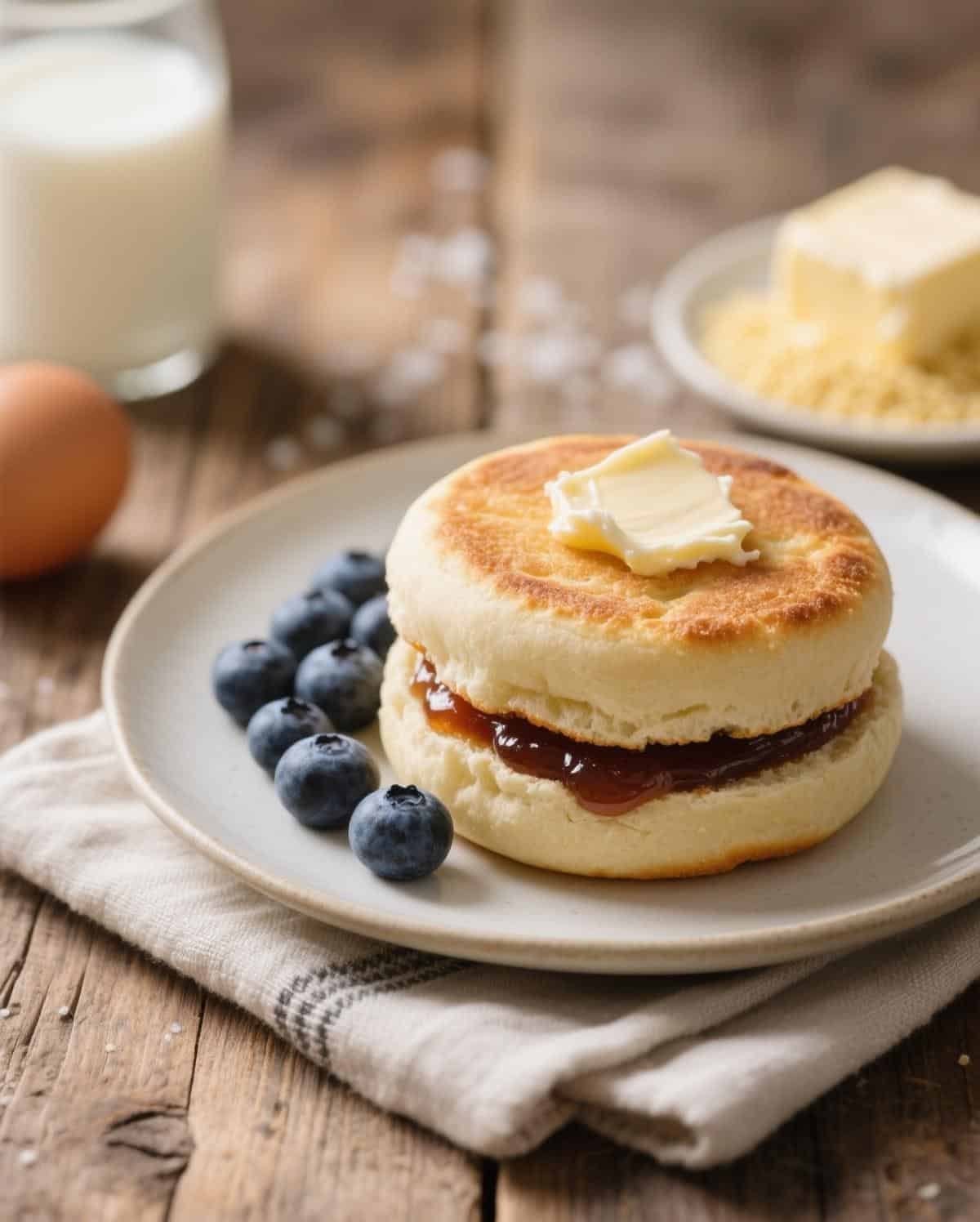
There’s nothing quite like the smell of a homemade english muffin toasting in the morning. That warm, yeasty aroma that fills the kitchen promises a breakfast of pure comfort, with its signature craggy surface just begging for a pat of butter to melt into every nook and cranny. It’s a taste of my childhood, a simple joy that feels both timeless and deeply personal.
I’ve always believed the best english muffins are the ones you make with your own two hands. It’s a process that invites you to slow down, to feel the dough come alive under your fingers. And while I adore a classic blueberry muffin for a sweet treat, there’s something uniquely satisfying about creating these griddle-cooked rounds from scratch. Have you ever wondered why English muffins have those famous nooks and crannies? It’s all in the technique!
Table of Contents
Table of Contents
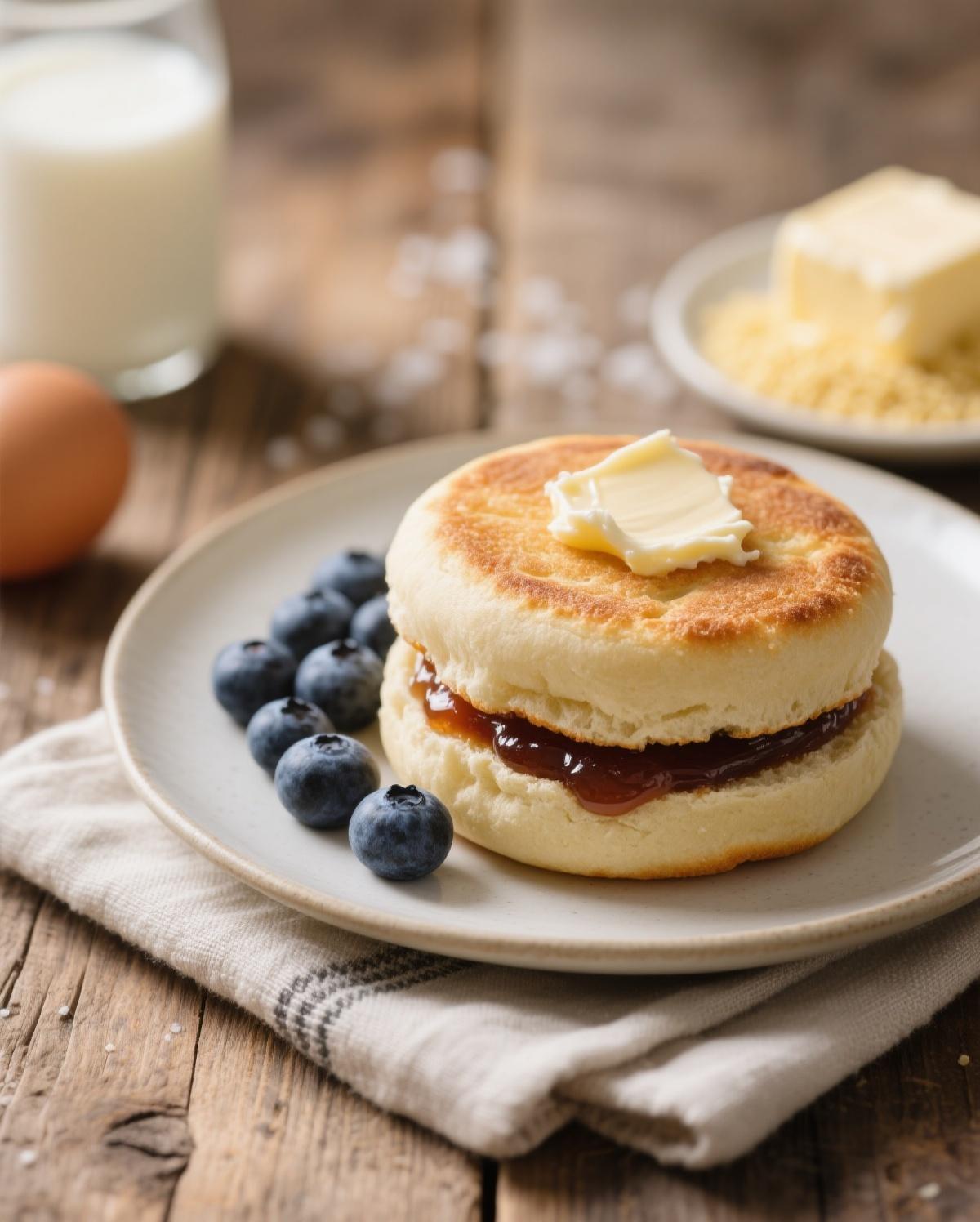
Ingredients for english muffin
- 2 cups bread flour
- 1 cup whole milk
- 2 tablespoons granulated sugar
- 2 1/4 teaspoons active dry yeast
- 1 large egg
- 3 tablespoons unsalted butter, melted
- 1 teaspoon fine sea salt
- Cornmeal for dusting
Estimated Prep & Cook Time for easy english muffins
Making these diy english muffins is a labor of love, but most of the time is hands-off while the dough rises. The active time is wonderfully manageable, perfect for a weekend baking project.
- Prep time: 20 minutes
- Rise time: 1 hour 30 minutes
- Cook time: 16 minutes (per batch)
- Total time: About 2 hours 6 minutes
While you wait for the dough to rise, why not browse some of my other recipes, like these delightful healthy banana muffins?
How to Make homemade english muffins
Follow these steps to create the best english muffins you’ve ever tasted, right in your own kitchen.
Step 1: Activate the Yeast
Warm the milk to about 110°F and stir in the sugar and yeast. Let sit for 5-10 minutes until foamy.
Step 2: Combine Dry Ingredients
In a large bowl, combine the flour and salt. Pour in the yeast mixture, melted butter, and egg.
Step 3: Knead the Dough
Mix until a shaggy dough forms, then knead on a floured surface for 8-10 minutes until smooth.
Step 4: First Rise
Place the dough in a greased bowl, cover, and let rise in a warm place for 1 hour or until doubled.
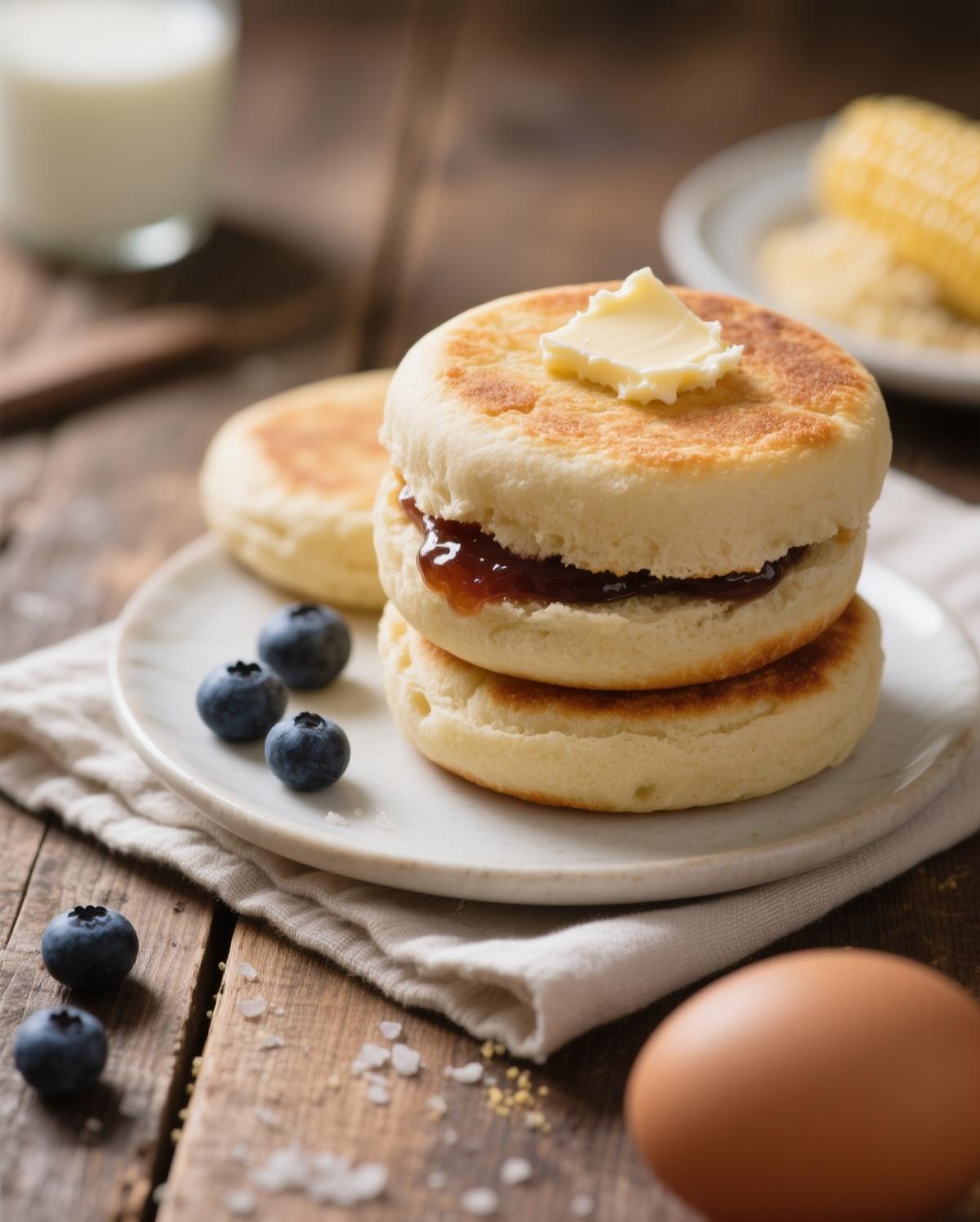
Step 5: Shape the Muffins
Punch down the dough and roll it out on a surface dusted with cornmeal to ½-inch thickness.
Step 6: Cut Out Rounds
Use a 3-inch round cutter to cut out muffins. Re-roll scraps as needed.
Step 7: Second Rise
Dust a baking sheet with cornmeal, place muffins on it, and let rise for 30 minutes.
Step 8: Cook on the Griddle
Cook muffins on a lightly oiled griddle or skillet over medium-low heat for 6-8 minutes per side.
Pro Tips & Tasty Tweaks
Over the years, I’ve picked up a few tricks to make these english muffins without pork even more special. Here are my favorite ways to add a little personal flair.
- Flavor Swap: For a richer flavor, try substituting the whole milk with buttermilk. It adds a lovely tang.
- Diet Tweak: To make these a bit lighter, you can use a 50/50 blend of bread flour and whole wheat flour. For more inspiration, see my healthy blueberry muffins.
- Prep Fix: No round cutter? A clean, empty tin can works perfectly in a pinch!
- Storage Tip: These freeze beautifully. I always double the batch and freeze some for later, just like I do with my banana protein muffins.
Nutrition and Health Benefits
I’m a firm believer that food is meant to be enjoyed, and that includes these wonderfully satisfying homemade english muffins. While they are a treat, they’re made with simple, real ingredients you can feel good about.
Using whole milk and butter provides richness and fat-soluble vitamins, while the bread flour offers a good source of complex carbohydrates for sustained energy. Many people often ask, are English muffins healthier than bread? It really depends on the recipe, but since you control the ingredients, you can make yours a wholesome choice.
For a deeper dive into nutritious baking, check out my recipes for blueberry yogurt muffins and cottage cheese blueberry muffins. The American Heart Association also has great resources on balancing fats in your diet.
A Lighter Version of english muffin
Can you make a healthier english muffin? Absolutely! With a few thoughtful swaps, you can create a version that aligns with your wellness goals without sacrificing that classic taste and texture we all love.
For a lighter take, try using half whole wheat pastry flour and half bread flour. You can also replace the granulated sugar with a touch of honey or maple syrup. For a protein boost similar to my blueberry protein muffins, try adding a scoop of unflavored protein powder to the dry ingredients.
Exploring alternative flours can be fun! Resources from King Arthur Baking are invaluable. And if you love fruity muffins, my blueberry oatmeal muffins are another fantastic, fiber-rich option.
Thoughtful Tips for Special Diets
Cooking for loved ones with different dietary needs is an act of love. Here are a few gentle tweaks to help everyone enjoy a warm english muffin at the table.
For those monitoring sugar, you can reduce the amount slightly without issue, or use a natural alternative like stevia designed for baking. For a dairy-free version, almond or oat milk works wonderfully in place of whole milk, and a plant-based butter can be substituted.
The key is to experiment and find what works for you and your family. The goal is always to share the joy of a homemade meal together.
How to Serve english muffin
Oh, the possibilities! A perfectly toasted english muffin is a blank canvas for so many delicious moments. I remember my father teaching me the proper way to fork-split them to preserve every last nook for catching jam.
For a classic treat, slather them with good butter and a dollop of homemade jam. For a hearty breakfast, top with a poached egg and a sprinkle of paprika. They also make incredible mini pizzas for a quick lunch! For a sweet twist, try using them in place of bread for French toast—it’s divine.
Pair your muffin with a cup of strong English breakfast tea or a glass of cold milk. And if you’re looking for more topping ideas beyond butter, my blueberry sour cream muffins might inspire a creamy berry topping.
Mistakes to Avoid
We’ve all had kitchen mishaps, my dears. It’s how we learn! Here are a few common pitfalls to avoid on your journey to the perfect english muffin.
- Too Hot to Handle: If your milk is too hot, it will kill the yeast. 110°F is warm to the touch, not scalding.
- Rushing the Rise: Don’t skimp on rise time. This is crucial for developing those famous nooks and crannies.
- High Heat: Cooking over too high a heat will burn the outside before the inside is cooked. Low and slow is the way to go.
- Not Dusting Enough: Be generous with the cornmeal! It prevents sticking and gives that authentic texture.
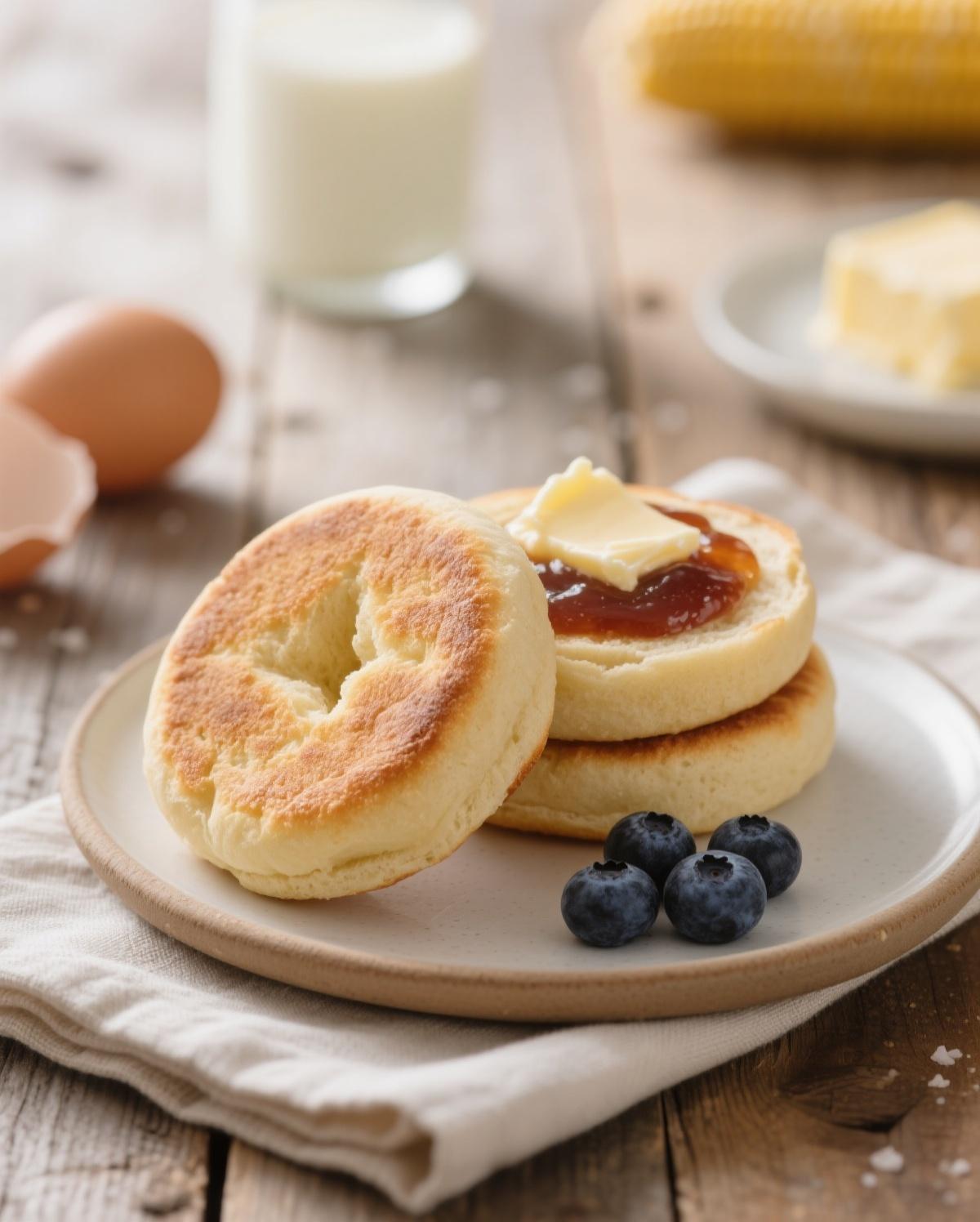
Remember, even imperfect homemade muffins are better than store-bought. Embrace the process!
How to Store english muffin
To keep your beautiful batch of diy english muffins fresh, let them cool completely after cooking. Then, place them in an airtight container or a zip-top bag.
They will stay fresh on the counter for about 2 days. For longer storage, they freeze magnificently for up to 3 months. Just pop a frozen muffin straight into the toaster—no need to thaw!
This make-ahead strategy is a lifesaver for busy mornings, much like having a stash of banana muffins in the freezer. For more freezing tips, the FoodSafety.gov cold storage charts are a great reference.
Try This english muffin Yourself
I truly hope you’ll give these homemade english muffins a try. There is a profound sense of accomplishment that comes from pulling a batch of these off the griddle, a feeling that connects us to generations of home bakers before us.
It’s more than just a recipe; it’s a chance to create a moment of warmth and comfort for yourself and your family. So dust off that rolling pin, warm up the milk, and fill your home with the unforgettable smell of baking. I promise, you won’t regret it.
If you love baking muffins as much as I do, you might also enjoy my classic blueberry muffins, blueberry oatmeal muffins, healthy blueberry muffins, or blueberry yogurt muffins. Happy baking!
Frequently Asked Questions
What is the difference between an English muffin and a regular muffin?
An English muffin is a yeast-leavened bread that is cooked on a griddle, giving it a flat, crisp top and bottom with a soft, airy interior full of holes. A regular muffin, like a blueberry muffin, is a quick bread leavened with baking powder or soda and baked in an oven, resulting in a sweeter, cakier dome-shaped product.
How do you properly fork split an English muffin?
Never slice it with a knife! To preserve all those precious nooks and crannies, take a fork and pierce it all around the equator. Then gently pry it apart into two rough, craggy halves. This creates the perfect surface for holding melted butter and jam.
Why do English muffins have nooks and crannies?
Those famous holes are created by the yeast producing gas bubbles during the two rise times. The griddle-cooking method then sets these bubbles in place, creating the perfect texture for toppings to nestle into. It’s the hallmark of a well-made english muffin!
Can you make French toast with English muffins?
Absolutely, and it’s delicious! Their porous texture soaks up the egg custard mixture beautifully. It makes for a wonderfully rich and textured French toast, perfect for a special weekend breakfast.
What is the best way to toast an English muffin?
For the ultimate crisp exterior and soft interior, a toaster or toaster oven is best. If you want to recreate that fresh-off-the-griddle feel, a dry skillet over medium heat for a minute or two on each side works wonders.
Are English muffins healthier than bread?
It depends on the recipes you’re comparing. A homemade english muffin like this one, made with simple ingredients, can be a wholesome choice. They are often lower in sugar than many commercial breads, and you control the sodium and fat levels.
How can you make homemade English muffins from scratch?
You’re in the right place! This recipe for easy english muffins walks you through the simple process of activating yeast, kneading dough, and griddle-cooking them to golden perfection. It’s easier than you think.
What are some good toppings for an English muffin besides butter?
Oh, so many! Try mashed avocado with a sprinkle of chili flakes, almond butter and banana slices, a soft-scrambled egg and chives, or even a bit of ricotta cheese and honey. For a sweet idea, the topping from my cottage cheese blueberry muffins would be lovely.