Table of Contents
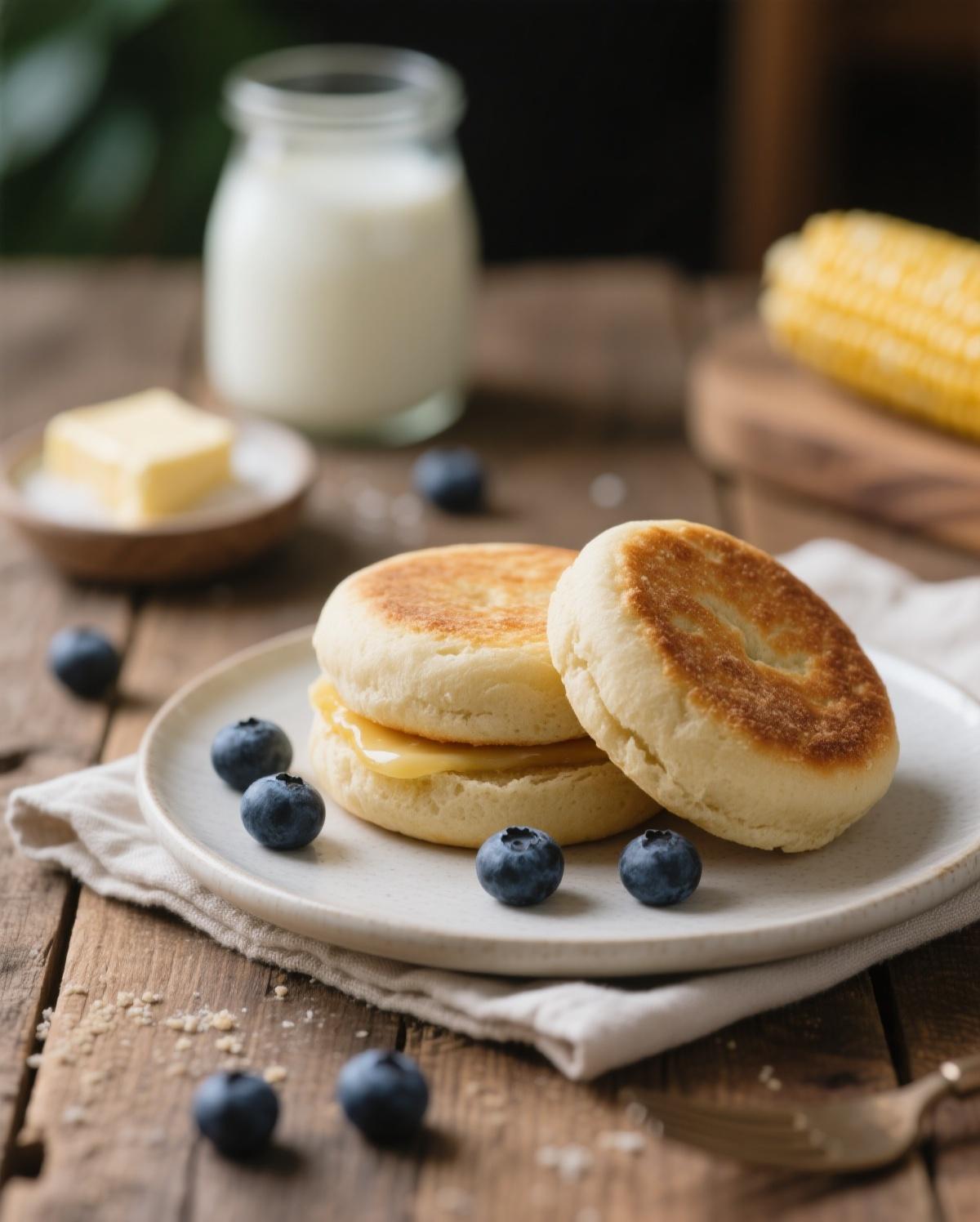
Ingredients You’ll Need for English muffin calories
- 2 cups whole wheat flour
- 1 cup all-purpose flour
- 1 packet (2 1/4 tsp) active dry yeast
- 1 tablespoon granulated sugar
- 1 teaspoon salt
- 1 cup warm milk (about 110°F)
- 2 tablespoons melted butter
- Cornmeal for dusting
Estimated Prep & Cook Time
Creating these healthy english muffin beauties is a labor of love, but so worth it. The active prep time is about 20 minutes. Then, you’ll need about an hour and a half for rising. The actual cooking on the griddle takes just 12-16 minutes. So, from start to finish, you’re looking at roughly 2 hours to create something far superior to any store-bought version, just like my favorite healthy blueberry muffins.Step-by-Step Instructions
Step 1: Activate the Yeast
In a large bowl, combine the warm milk, sugar, and yeast. Let it sit for 5-10 minutes until foamy. This magical foaming means your yeast is alive and ready to make your dough rise beautifully.Step 2: Combine the Ingredients
Stir in the melted butter, whole wheat flour, all-purpose flour, and salt until a shaggy dough forms. Don’t worry about perfection here; a shaggy dough is exactly what you’re aiming for at this stage.Step 3: Knead the Dough
Turn the dough onto a floured surface and knead for 8-10 minutes until smooth and elastic. This is wonderfully therapeutic—put on some music and enjoy the process of creating something from scratch.Step 4: First Rise
Place the dough in a greased bowl, cover, and let rise in a warm place for 1 hour or until doubled. This is the perfect time to put the kettle on for a cup of tea!
Step 5: Shape the Muffins
Punch down the dough—always satisfying!—and roll it out to a 1/2-inch thickness. Use a round cutter to form your muffins.Step 6: Dust with Cornmeal
Dust both sides of each muffin generously with cornmeal. This gives them that classic, slightly gritty texture and prevents sticking.Step 7: Second Rise
Place muffins on a baking sheet, cover, and let rise for another 30 minutes. They’ll get nice and puffy, promising light and airy results.Step 8: Cook on the Griddle
Cook on a preheated, ungreased griddle or skillet over medium-low heat for 6-8 minutes per side. You’re looking for a lovely golden-brown color with a firm exterior.Pro Tips & Tasty Tweaks
Over the years, I’ve learned a few tricks to make these muffins truly sing. Here are my favorite ways to add a little extra love to the process.- Flavor Swap: For a richer flavor, try using buttermilk instead of regular milk. It adds a lovely tang.
- Diet Tweak: To make these even lighter, you can replace half the all-purpose flour with oat flour, similar to my blueberry oatmeal muffins.
- Prep Fix: If your kitchen is chilly, let the dough rise in the oven with just the light on for a gentle, consistent warmth.
- Storage Tip: These freeze beautifully! Just like cottage cheese banana bread, cool completely and store in freezer bags for a quick breakfast anytime.
Nutrition & Health Tips
When we talk about english muffin calories, it’s not just about the number. It’s about the quality of those calories. This whole wheat english muffin recipe is a wonderful source of complex carbohydrates and fiber, thanks to the whole grains. This means they provide sustained energy to start your day, unlike sugary cereals. They are naturally lower in fat and a great base for healthy toppings. Many people ask, are English muffins a good low calorie breakfast option? Absolutely, especially when you make them yourself! For more ideas on a nutritious start to your day, explore my recipes for blueberry protein muffins or these delicious banana protein muffins.Healthier Alternatives
If you’re looking to trim a few more calories in muffin form, this recipe is wonderfully adaptable. You can easily make swaps to suit your dietary goals without sacrificing an ounce of flavor. Consider using unsweetened almond milk instead of whole milk. You could also reduce the sugar by half or use a natural alternative like honey. For an even higher fiber boost, try using all whole wheat flour! Are there low calorie english muffin options available? When you bake at home, the answer is always yes. For other lightened-up baked goods, my blueberry yogurt muffins and cottage cheese blueberry muffins are family favorites.Thoughtful Tips for Special Diets
Cooking for loved ones with different dietary needs is an act of care. Here’s how you can adapt this recipe to suit everyone at your table, keeping everyone’s health and happiness in mind. For those monitoring their glycemic control, the whole wheat flour is a great start. You could also replace the sugar with a low sugar alternative like stevia designed for baking. For a diabetic-friendly version, pairing one of these muffins with a source of protein and healthy fat, like nut butter or an egg, can help manage blood sugar response beautifully.Serving Suggestions for English muffin calories
Oh, the possibilities! A warm, homemade English muffin is a blank canvas for so many joyful meals. I love them best split and lightly toasted, just like my Nana taught me. For a classic treat, top with a pat of good butter and a dollop of homemade jam. For a protein-packed breakfast, try a poached egg and avocado. They’re also the perfect base for mini pizzas for a quick and healthy lunch the kids will love.Mistakes to Avoid
We’ve all had kitchen mishaps—they’re how we learn! Here are a few common pitfalls to avoid when making your English muffins, so your first batch is pure perfection.- Milk too hot: If your milk is hotter than 110°F, it can kill the yeast. Use a thermometer to be sure.
- Kneading too little: Don’t shortcut the kneading time. This develops the gluten needed for those famous nooks.
- Griddle too hot: Too high heat will brown the outside before the inside is cooked. Medium-low is key.
- Not using cornmeal: The cornmeal isn’t just for taste; it creates a barrier so your muffins don’t stick to the pan.
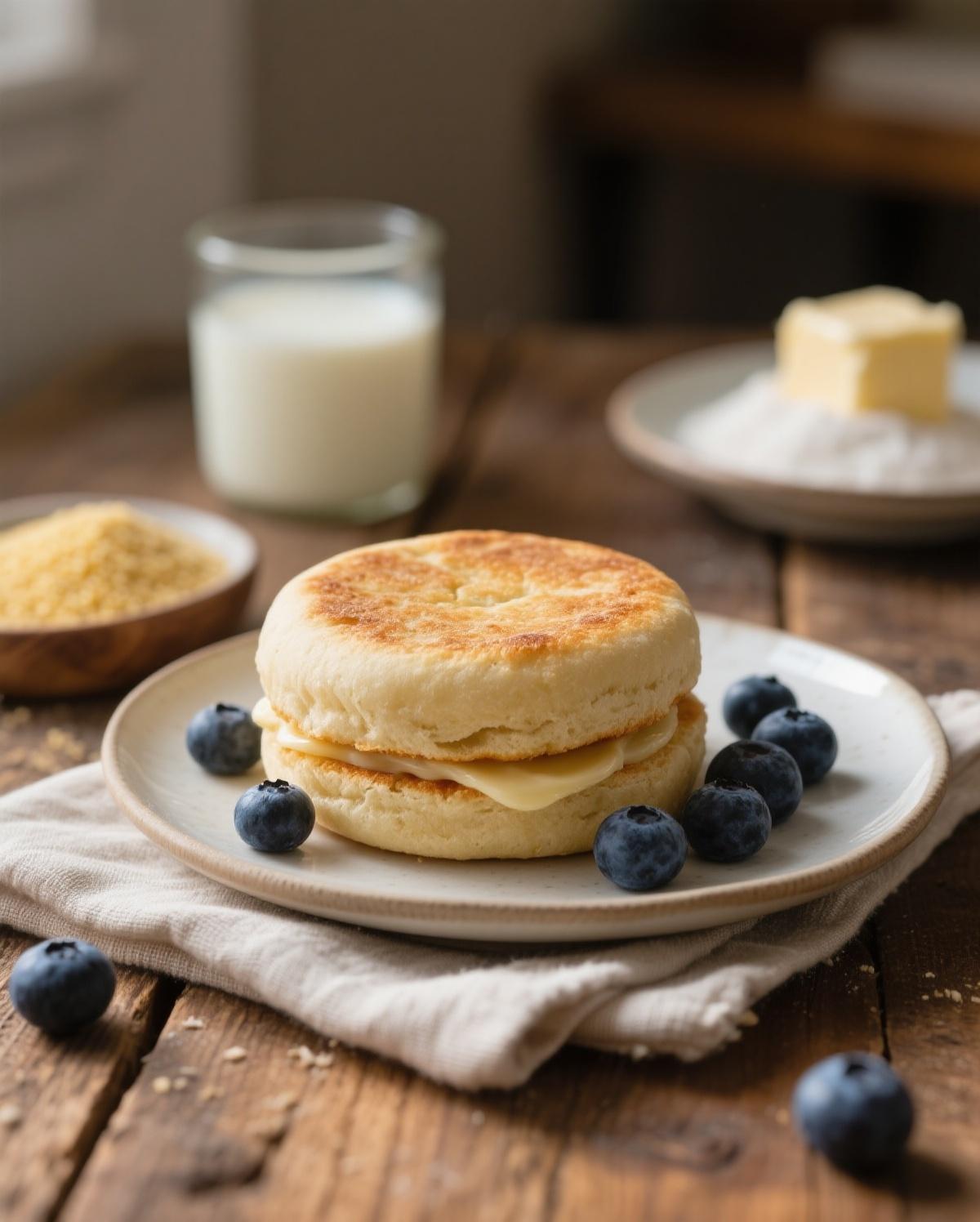
How to Store English muffin calories
To keep your homemade english muffins fresh, let them cool completely after cooking. Then, store them in a bread box or a paper bag at room temperature for up to 2 days. For longer storage, they freeze magnificently. Simply place them in a freezer-safe bag, and they’ll be ready for you whenever a muffin craving strikes. Just pop them straight into the toaster from frozen!Final Thoughts & Encouragement
I truly hope you feel inspired to try your hand at these homemade english muffins. There is no comparison to the store-bought kind, and knowing exactly what’s inside is so empowering. Whether you enjoy them with a simple smear of butter or get creative with your toppings, I know you’ll love them. The process of baking bread is a beautiful, grounding experience that connects us to generations of cooks before us. If you loved this recipe, you might also enjoy my healthy banana muffins, healthy blueberry muffins, or any of the other wonderful recipes on the site like blueberry protein muffins, banana protein muffins, blueberry yogurt muffins, cottage cheese blueberry muffins, blueberry oatmeal muffins, and cottage cheese banana bread.FAQ) about English muffin calories
How many calories are in an English muffin?
A plain, homemade english muffin from this recipe typically contains about 120-140 calories, depending on its exact size. This makes it a wonderfully light and satisfying base for any meal.
Are English muffins a good low calorie breakfast option?
Absolutely! Their modest english muffin calories count, combined with complex carbs and fiber, makes them an excellent choice. Pair one with protein like an egg or nut butter for a balanced, low calorie start to your day.
What is the calorie difference between white and wheat English muffins?
The calories in muffin versions made with white flour versus whole wheat are often similar. The real difference is in nutrition—a whole wheat english muffin offers more fiber, vitamins, and minerals, making it the healthier choice.
How do English muffin calories compare to a slice of bread?
They are quite comparable! A typical slice of bread has 80-100 calories, while an English muffin is around 120-140. However, the English muffin often feels more substantial due to its density, so you may feel more satisfied.
How many calories are in a buttered English muffin?
This is where it can add up. A teaspoon of butter adds about 35 calories. So, a buttered muffin would be around 155-175 calories. For a lighter option, try a thin smear of avocado or a sugar-free fruit spread.
What is the calorie content of a plain English muffin?
A plain English muffin, without any added butter or jam, is what we refer to when we quote the base english muffin calories. For a store-bought one, it’s usually on the packaging. For our homemade version, it’s about 120-140 calories.
Do toasted English muffins have more calories than untoasted?
No, toasting does not change the calorie count. It simply removes moisture, which makes the muffin crispier and can change how we perceive its weight and flavor. The calories remain exactly the same.