Simple Vanilla Muffin for Baby No Egg
↓ Jump to Recipe
Looking for a safe treat for your little one? This easy vanilla muffin for baby no egg is soft, flavorful, and perfect for tiny hands to hold.
Finding a reliable muffin for baby no egg can be a delightful way to introduce new textures to your little one. These golden-brown treats are crafted to be soft and fluffy, making them a safe and comforting snack. Using basic pantry staples, you can quickly whip up a batch that is both delicious and simple to handle. Our recipe focuses on a light crumb that is easy for babies to chew and swallow safely. Whether you are prepping for a busy week or a quiet afternoon snack, these muffins are a kitchen staple you will turn to often.
Table of Contents
Table of Contents
Ingredients
- 2 cups (250g) All-purpose flour
- 1/2 cup (100g) Granulated sugar
- 1 tablespoon (12g) Baking powder
- 1/4 teaspoon (1g) Fine sea salt
- 1 cup (240ml) Whole milk
- 1/3 cup (75g) Unsalted butter, melted and cooled
- 1 tablespoon (15ml) Vanilla extract
- 1/2 cup (120g) Plain Greek yogurt
- 1/4 cup (60ml) Applesauce, unsweetened
To create the perfect eggless muffin for baby, you only need a handful of pantry staples. This recipe relies on Greek yogurt and applesauce to provide moisture and structural integrity in the absence of eggs.
Essential Kitchen Tools
| Tool | Purpose |
|---|---|
| Muffin Tin | Standard 12-cup pan for even baking |
| Whisk | To aerate dry ingredients |
| Mixing Bowls | Glass or stainless steel for consistency |
| Rubber Spatula | To fold ingredients gently |
| Wire Cooling Rack | To prevent soggy bottoms |
Why This Recipe Works
The Chemistry of Egg-Free Baking
Achieving a perfect texture without eggs requires replacing their structural role as binders and leavening agents. By utilizing a precise ratio of Greek yogurt and unsweetened applesauce, this recipe compensates for the lack of egg proteins, which typically provide structural integrity. The thick, viscous nature of Greek yogurt acts as a stabilizer, holding the muffin together, while the pectin in the applesauce provides moisture that prevents the crumb from becoming overly dry or dense. For the leavening process, the baking powder interacts specifically with the lactic acid present in the yogurt. This chemical reaction generates carbon dioxide bubbles immediately upon contact, which then expand rapidly under the 375°F (190°C) oven heat. This dual-action process creates a light, porous interior that is soft enough for a baby to gum easily without requiring extensive chewing.
The inclusion of melted butter—cooled to room temperature—is essential for creating a tender mouthfeel by shortening the gluten strands, ensuring the muffin does not become chewy. By baking for exactly 20 to 22 minutes, you allow the center to reach an internal temperature of roughly 200°F (93°C), which sets the crumb firmly. This timing is critical; baking too long will evaporate the essential moisture provided by the fruit purée, leading to a hard crust that is difficult for a baby to manage. The result is a nutritionally dense, handheld snack that holds its shape well when picked up by tiny hands, providing a safe, egg-free introduction to solid textures.
Pro Tips for Better Results
- Flour density management is critical. Avoid the common mistake of scooping flour directly with a measuring cup, which compresses the particles and leads to dry, leaden muffins. Instead, gently spoon the flour into your measuring cup and level it off with the back of a knife to ensure the exact hydration balance needed for egg-free baking.
- Temperature control is vital during the mixing phase. If your melted butter is too hot, it will instantly curdle the Greek yogurt and deactivate the leavening agents before they reach the oven. Always let your butter sit for at least ten minutes after melting until it is lukewarm to the touch.
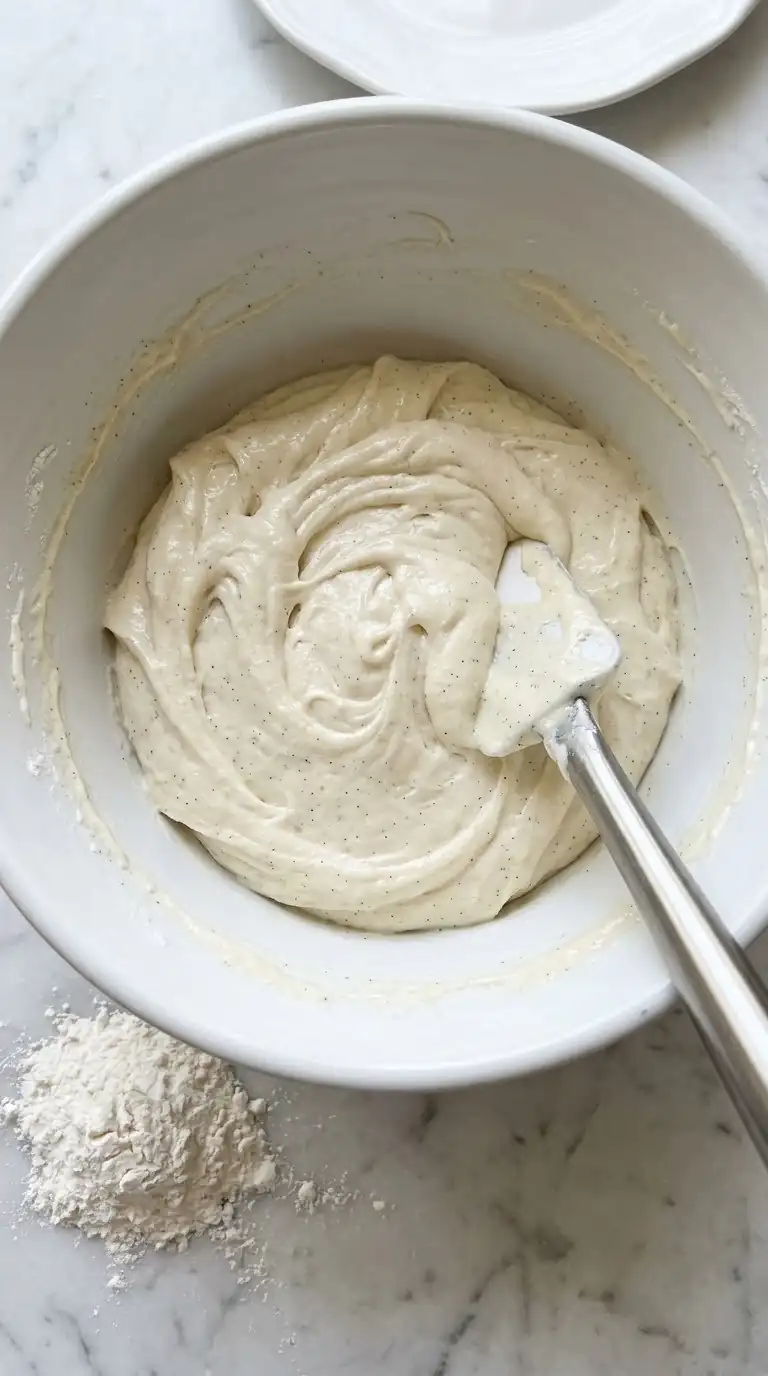
- Mastering the 'fold' technique is the secret to a fluffy muffin. Overmixing develops excess gluten, resulting in a rubbery, dense final product that is unsuitable for infants. Once you add your wet ingredients to the dry, use a silicone spatula to fold the batter just until the white streaks of flour disappear. A few small lumps are not just acceptable; they are a sign that you have avoided overworking the batter.
- Preheat your oven for at least 20 minutes before inserting the tray. This ensures the oven has reached a consistent 375°F (190°C). If the oven is not at temperature, the muffins will fail to rise, resulting in a flat, gummy texture. Using a light-colored metal pan is preferable, as it heats evenly and prevents the bottoms of the muffins from scorching before the middle is fully set.
Nutrition Facts (per serving)
| Nutrient | Amount |
|---|---|
| Calories | 185 kcal |
| Total Fat | 7g |
| Carbohydrates | 28g |
| Protein | 3g |
Figures are estimates; you can check individual ingredients in USDA FoodData Central.
Instructions
- Preheat your oven to 375°F (190°C) and line a standard 12-cup muffin tin with paper liners to ensure the muffins do not stick.
- In a large mixing bowl, whisk together the flour, sugar, baking powder, and salt until well combined, which creates an even distribution of leavening agents.
- In a separate bowl, whisk the milk, melted butter, vanilla extract, Greek yogurt, and applesauce together until the mixture is smooth and emulsified.
- Pour the wet ingredients into the dry ingredients and stir with a spatula just until the flour disappears to prevent the muffins from becoming tough.
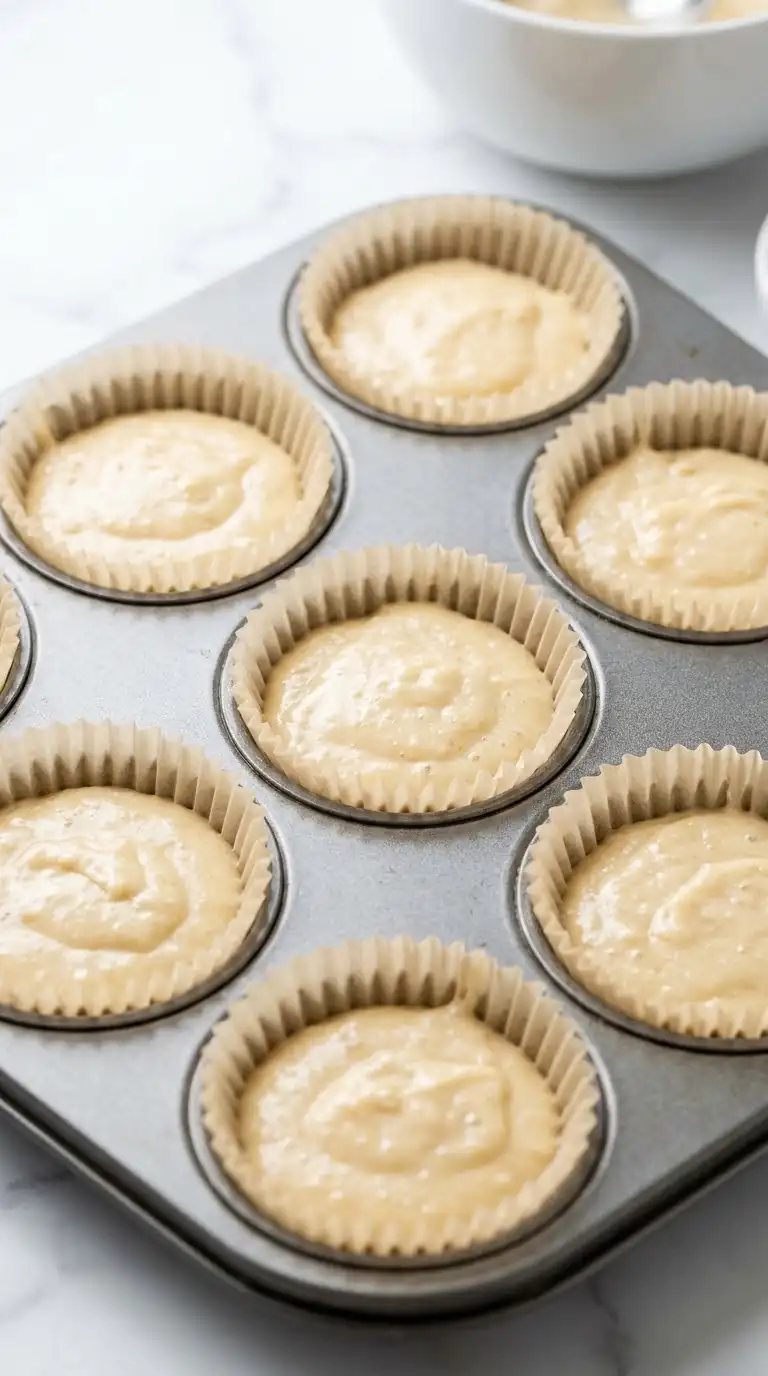
- Use a standard ice cream scoop to divide the batter evenly among the twelve muffin cups so that they bake at the same rate.
- Bake in the center of the preheated oven for 18 to 20 minutes, or until a wooden toothpick inserted into the center comes out clean.
- Remove the pan from the oven and let the muffins cool in the tin for 5 minutes, which allows the steam to set the structure before handling.
- Transfer the muffins to a wire cooling rack and allow them to cool completely before serving, which prevents moisture from trapped steam.
Recipe Variations
Adding Gentle Flavor Profiles
Introducing diverse flavors early in a baby’s development helps broaden their palate, but consistency and texture remain the priority. Once the foundational egg-free recipe is successful, you can incorporate gentle enhancements that boost nutrient density without compromising safety. A pinch of ground cinnamon, ginger, or cardamom can introduce aromatic complexity; however, do not exceed a quarter-teaspoon for the entire batch to ensure the flavor is subtle rather than overwhelming. When incorporating fruit, prioritize softness and size. Blueberries should be finely diced or mashed into a paste to ensure they do not become choking hazards. If using cooked carrots or squash, ensure they are finely grated so they integrate into the batter without leaving large, hard pieces that might frustrate a baby learning to chew.
Another excellent variation is incorporating ground seeds like chia or flax. If you add one tablespoon of finely ground flaxseed mixed with two tablespoons of water, you create a secondary binder that adds healthy fats and fiber. Always ensure these extras are folded in at the final stage of mixing to prevent overworking the batter. If you choose to add pureed vegetables like pumpkin or sweet potato, reduce the amount of applesauce by one tablespoon to maintain the correct moisture-to-binder ratio. Avoid adding large chunks of dried fruit, nuts, or seeds that are not finely ground, as these represent significant choking risks for infants. Always test a small portion of the new flavor profile to ensure there are no sensitivities. By following these precise adjustments, you can keep the structural integrity of the muffin perfectly tailored for your baby's current developmental stage while offering a diverse range of healthy, plant-forward ingredients.
Simple Vanilla Muffin for Baby No Egg
Looking for a safe treat for your little one? This easy vanilla muffin for baby no egg is soft, flavorful, and perfect for tiny hands to hold.
Ingredients
Instructions
- Preheat your oven to 375°F (190°C) and line a standard 12-cup muffin tin with paper liners to ensure the muffins do not stick.
- In a large mixing bowl , whisk together the flour, sugar, baking powder, and salt until well combined, which creates an even distribution of leavening agents.
- In a separate bowl, whisk the milk, melted butter, vanilla extract, Greek yogurt, and applesauce together until the mixture is smooth and emulsified.
- Pour the wet ingredients into the dry ingredients and stir with a spatula just until the flour disappears to prevent the muffins from becoming tough.
- Use a standard ice cream scoop to divide the batter evenly among the twelve muffin cups so that they bake at the same rate.
- Bake in the center of the preheated oven for 18 to 20 minutes, or until a wooden toothpick inserted into the center comes out clean.
- Remove the pan from the oven and let the muffins cool in the tin for 5 minutes, which allows the steam to set the structure before handling.
- Transfer the muffins to a wire cooling rack and allow them to cool completely before serving, which prevents moisture from trapped steam.