Potato Soup Recipe
↓ Jump to Recipe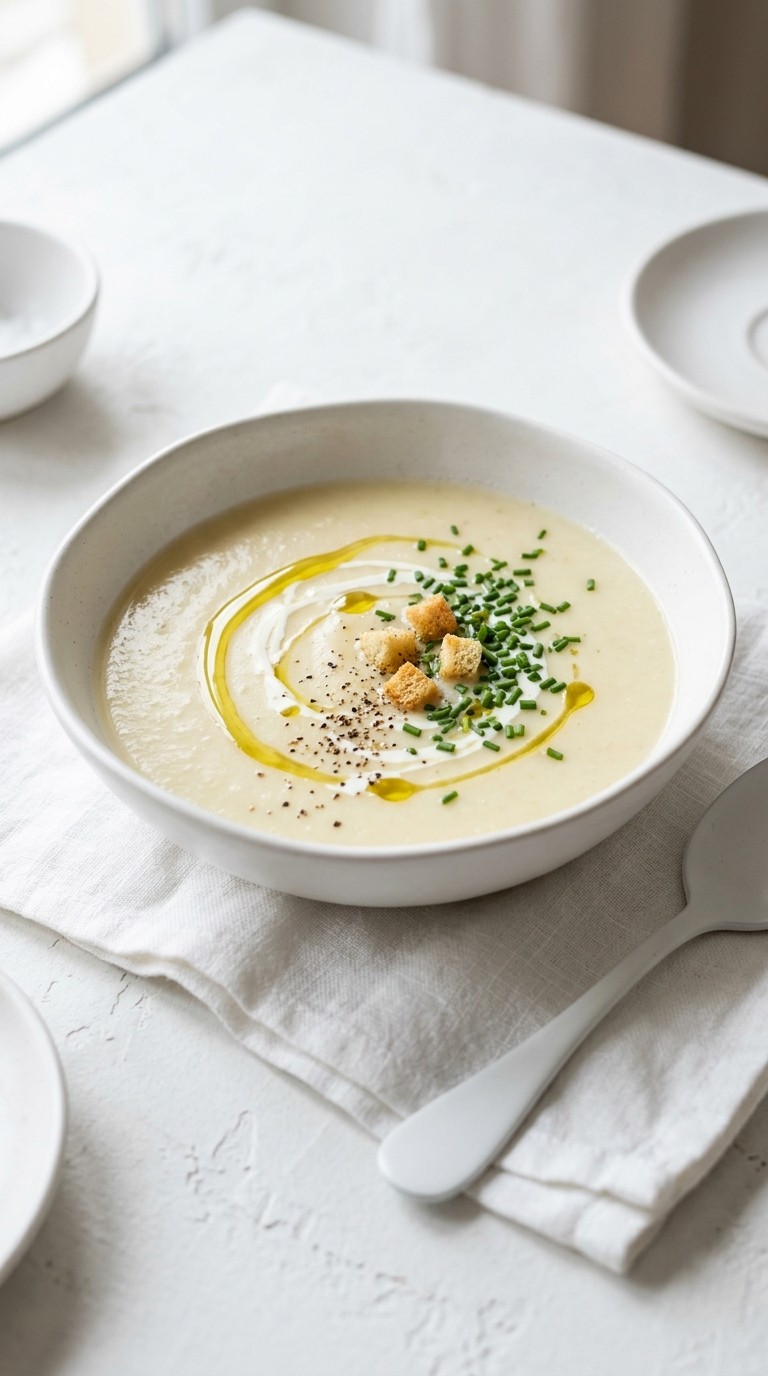
A hearty, creamy potato soup made from pantry staples in under 40 minutes, perfect for a quick family dinner.
There’s nothing like a bowl of warm potato soup on a chilly evening. This recipe relies on everyday pantry ingredients you probably already have on hand. In just 30‑40 minutes you’ll have a velvety, comforting soup that serves a small crowd. The method balances the starch of potatoes with a light broth, creating a soup that’s both hearty and smooth. Follow the clear steps and enjoy a classic American comfort food without any fuss.
Ingredients
- 4 medium russet potatoes (about 800 g / 1.8 lb), peeled and diced
- 1 large onion (150 g / 5 oz), finely chopped
- 2 carrots (150 g / 5 oz), diced
- 2 celery stalks (100 g / 3.5 oz), diced
- 2 garlic cloves, minced
- 4 cups (960 ml) low‑sodium chicken broth
- 1 cup (240 ml) whole milk
- 1/2 cup (120 ml) heavy cream
- 2 tablespoons (30 g) unsalted butter
- 2 tablespoons (15 g) all‑purpose flour
- 1 teaspoon (5 g) dried thyme
- Salt and freshly ground black pepper to taste
Gather fresh potatoes, onions, carrots, celery, garlic, and quality broth for a comforting soup. The combination of creamy potatoes and aromatic vegetables creates a balanced flavor that feels both homey and satisfying.
All measurements are provided in both metric and imperial units so you can work with whichever system you prefer.
Essential Kitchen Tools
| Tool | Purpose |
|---|---|
| Chef’s knife | Dice potatoes and vegetables uniformly. |
| Cutting board | Provides a stable surface for chopping. |
| Large pot (6‑qt) | Accommodates broth, vegetables, and blending. |
| Immersion blender | Creates a partially pureed texture without transferring soup. |
| Wooden spoon | Stirs without scratching the pot. |
| Measuring cups & spoons | Ensures accurate liquid and dry ingredient ratios. |
Why This Recipe Works
The secret to a silky potato soup lies in the balance of starch and liquid. By first creating a roux with butter and flour, you introduce a thickening agent that coats the potato pieces, preventing them from releasing too much starch all at once. This controlled release yields a broth that thickens gradually, giving you a velvety mouthfeel without a gummy texture.
Simmering the potatoes in broth rather than water infuses the soup with savory depth from the start. Adding dairy at the very end warms the soup without reaching a boil, which protects the milk and cream from curdling and preserves their delicate flavor.
Pro Tips for Better Results
- Use a heavy‑bottomed pot to distribute heat evenly and avoid scorching the roux.
- Dice potatoes into uniform ½‑inch cubes; consistent size ensures even cooking.
- Reserve a cup of the cooking liquid before blending; you can thin the soup later if it becomes too thick.
- Season in layers: add a pinch of salt with the vegetables, then adjust after blending for a more balanced flavor.
- Finish with a drizzle of olive oil or a sprinkle of fresh chives for brightness just before serving.
Nutrition Facts (per serving)
| Nutrient | Amount |
|---|---|
| Calories | 480 kcal |
| Protein | 9 g |
| Carbohydrates | 45 g |
| Fat | 28 g |
| Saturated Fat | 15 g |
| Sodium | 620 mg |
| Fiber | 4 g |
Potato Soup Recipe
A hearty, creamy potato soup made from pantry staples in under 40 minutes, perfect for a quick family dinner.
Ingredients
Instructions
- Heat butter in a large pot over medium heat, allowing it to melt fully before adding aromatics; this prevents scorching and releases flavor.
- Add onion, carrots, and celery, sauté for 5‑6 minutes until softened; cooking the vegetables first builds a flavor base.
- Stir in garlic and flour, cooking for 1 minute; the flour creates a roux that will thicken the soup later.
- Pour in the chicken broth while stirring, scraping the pot bottom to dissolve the roux; this ensures a smooth texture without lumps.
- Add the diced potatoes and thyme, bring to a gentle boil, then reduce heat to a simmer; simmering allows potatoes to become tender and release starch, thickening the broth naturally.
- Cook for about 15 minutes, or until potatoes are fork‑tender; checking tenderness prevents overcooking which could make the soup gluey.
- Using an immersion blender , partially blend the soup to achieve a creamy consistency while leaving some potato chunks for texture; this step balances smoothness and heartiness.
- Stir in milk and heavy cream, heating just until the soup is hot but not boiling; gentle heating preserves the dairy’s flavor and prevents curdling.
- Season with salt and pepper, taste, and adjust seasoning as needed; final seasoning brings all flavors together.