Homemade Strawberry Gelatin Cups with Fresh Fruit: Step-by-Step Instructions
Instructions
- Put 80 ml (1/3 cup) of the cold water in a small bowl. Sprinkle the gelatin over the surface in an even layer and leave it alone for 5 to 10 minutes. The grains will drink the water and turn into a thick, wrinkled sponge. This step is called blooming and it is what keeps the finished dessert smooth instead of grainy.
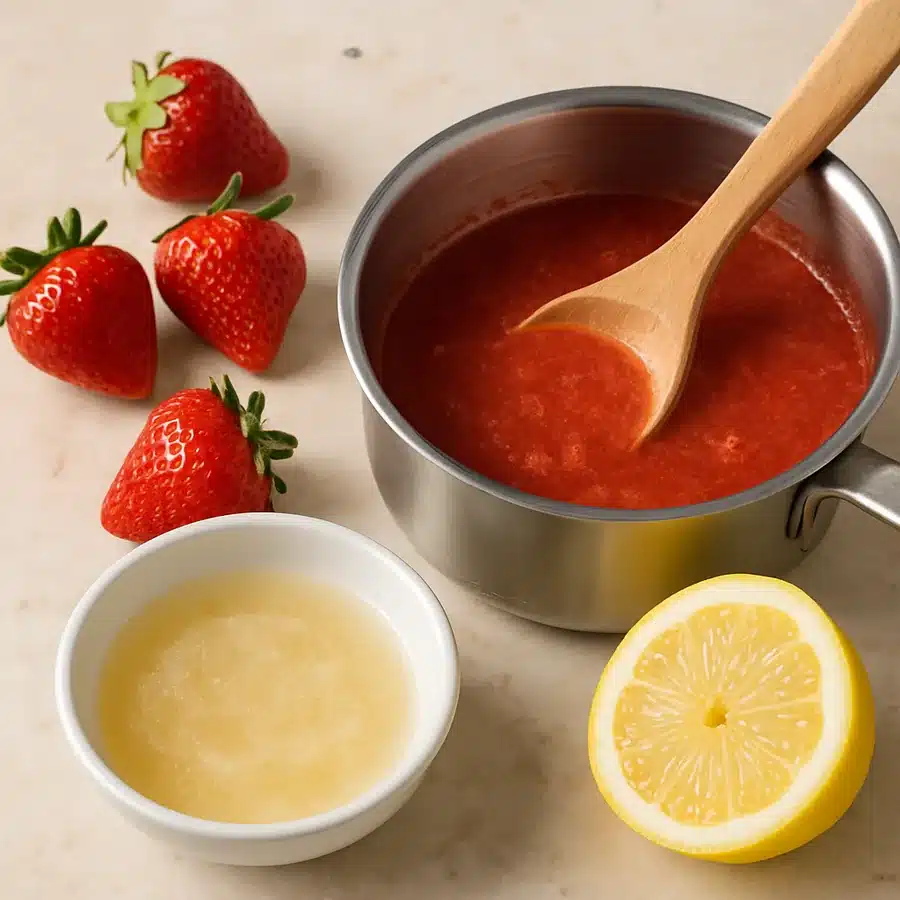
- While the gelatin blooms, hull the 500 g of strawberries and cut them in half. Put them in a saucepan with the sugar, the lemon juice, the pinch of salt and the remaining 170 ml of water.
- Warm the pan over medium heat and let the fruit cook gently for 8 to 10 minutes, crushing it with the back of a spoon as it softens. You want the berries collapsed and the liquid deep red.
- Pour the mixture through a fine sieve set over a bowl, pressing on the pulp with a spoon to get all the juice out. You should have roughly 500 ml of hot strawberry liquid. Taste it now and add a little more sugar or lemon if it needs it; once the gelatin sets, the flavour cannot be changed.
- Take the hot liquid off the heat and let it cool for two minutes, then add the bloomed gelatin. Stir slowly for about a minute until there is not a single visible grain left. Never boil the mixture after the gelatin goes in, as high heat weakens its setting power.
- Divide the sliced strawberries between six glasses or small jars. Pour the warm liquid over them, filling each glass almost to the top.
- Let the cups sit on the counter for 20 minutes, then move them to the fridge, uncovered, for at least 4 hours and ideally overnight. They are ready when the surface springs back under a light touch and the fruit stays suspended.
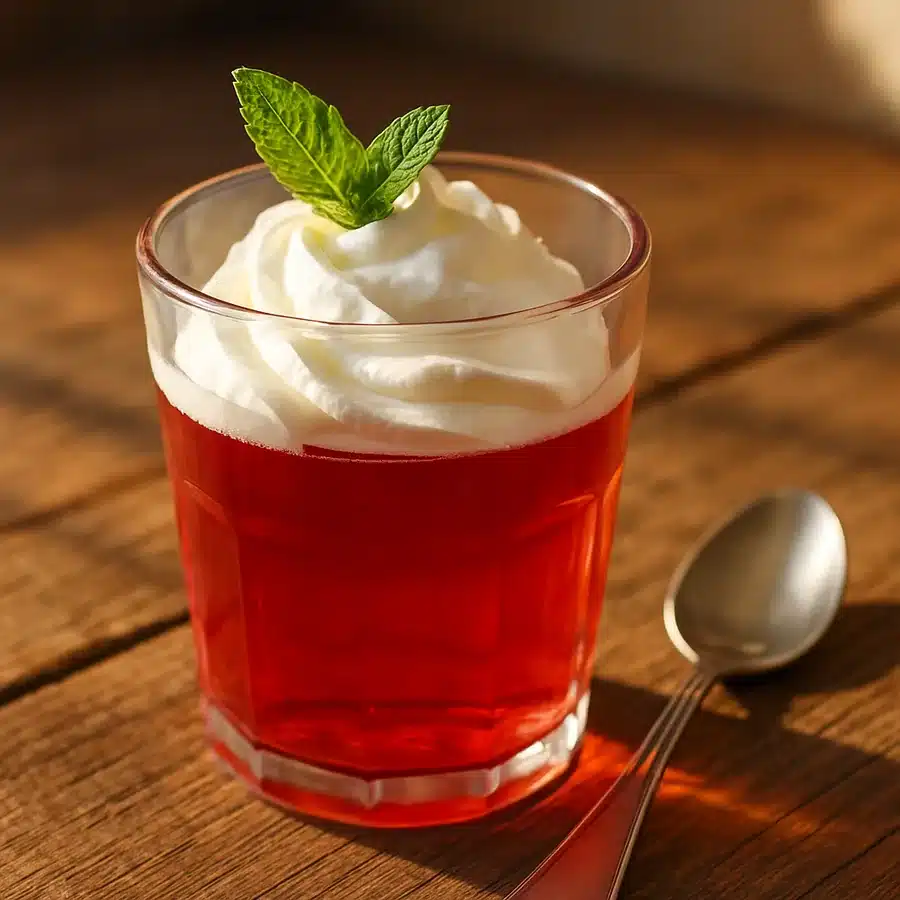
- Serve cold, with a spoonful of whipped cream and a mint leaf on top if you like.
Recipe Variations
Layered cups. Pour half the mixture, chill for 90 minutes until firm, then add a layer of lightly sweetened yoghurt or coconut milk thickened with one teaspoon of gelatin, and finish with the rest of the strawberry layer. The stripes look remarkable through glass.
Berry mix. Replace a third of the strawberries with raspberries or blackberries. The colour turns almost purple and the flavour gets a pleasant sharpness.
Creamy version. Stir 150 ml of cold cream into the strained liquid before adding the gelatin. You end up somewhere between a jelly and a panna cotta: softer, paler and very rich.
Citrus lift. Add a strip of orange zest to the pan while the fruit cooks and remove it before straining.
No sugar added. Very ripe fruit plus two tablespoons of honey stirred in off the heat is enough for most people.
Serving Ideas
Serve the cups straight from the fridge, with a spoonful of whipped cream and a mint leaf. On a hot evening, a few extra sliced strawberries on top are all the decoration they need.
For a party, set the jelly in small jars with lids: they travel well and guests can take one in hand without a plate. For children, pour the mixture into a shallow dish, let it set firm and cut it into cubes they can pick up with their fingers.
They also sit nicely beside a plain sponge cake or a scoop of vanilla ice cream, where the acidity of the fruit does the work of a sauce.
Keeping It Fresh
Keep the cups in the fridge, loosely covered once they are fully set, for up to three days. After that the gelatin begins to weep and a thin layer of liquid collects at the bottom; it is still safe, but the texture suffers.
Do not freeze them. Freezing destroys the gel network, and what thaws is a pink puddle with pieces of fruit floating in it.
If you need to transport them, set them in small jars with lids and carry them in a cool bag. They hold their shape well for two or three hours out of the fridge on a mild day, less in real heat.
Reader Questions Answered
How long does strawberry gelatin take to set?
Four hours in a cold fridge for small cups, and a full night for a large mould. Thin layers set faster, so layered cups move along more quickly than one deep glass.
Can I use gelatin sheets instead of powder?
Yes. Three teaspoons of powder is about five standard sheets. Soak the sheets in plenty of cold water for five minutes, squeeze them firmly and stir them into the warm liquid.
Can I make it without gelatin?
Agar-agar is the usual plant-based swap: use one teaspoon of agar powder for this quantity, and note that it must be boiled for two minutes to activate, which is the opposite of gelatin. The result is firmer and less wobbly.
Why is my gelatin cloudy?
Usually because the pulp was pressed too hard through the sieve. For a crystal-clear dessert, let the juice drain on its own without pushing it.
Which fruits must I avoid?
Fresh pineapple, kiwi, papaya, mango, figs and fresh ginger contain enzymes that break gelatin down, so the cups never set. The canned versions are heat-treated and perfectly safe.
Wrapping Up
Real fruit, plain gelatin and a little patience in the fridge: that is the whole recipe. Once you have made these strawberry gelatin cups a first time, the method stops being a recipe and becomes a technique you can point at any fruit in the kitchen, from peaches in August to oranges in January.
Make them the day before, keep the sweetness low, and serve them very cold. That is where this dessert is at its best.
Related recipes: Creamy Orange Gelatin Squares You Can Eat With Your Hands, Dubai Chocolate Bars with Pistachio Filling, Baked Oats with Banana and Blueberries, Cheeseburger Casserole with Pickles and Cheddar, Marry Me Chicken in a Creamy Sun-Dried Tomato Sauce.
Learn more: Strawberry on Wikipedia · food storage & safety (FoodSafety.gov).
◆ ◆ ◆
← Back to Homemade Strawberry Gelatin Cups with Fresh FruitGet new recipes
One tasty homemade recipe in your inbox each week. No spam, unsubscribe anytime.



Comments (12)