Simple Homemade Sourdough English Muffins
↓ Jump to Recipe
Master the art of crafting sourdough english muffins in your own kitchen. This guide helps you create bakery-quality bread with signature texture.
Nothing beats the taste of warm sourdough english muffins pulled right from the griddle. By utilizing your active starter, you achieve that perfect balance of tangy flavor and airy structure. These english muffins sourdough treats are far superior to anything you find at the grocery store. This recipe focuses on simple techniques to yield that classic cratered interior we all crave. You will find that making these at home is a rewarding ritual that fills your kitchen with a cozy, yeasty aroma. Let's get started on your sourdough journey.
Table of Contents
Table of Contents
Ingredients
- 1 cup (225g) active bubbly sourdough starter
- 1 cup (240ml) whole milk, warmed
- 2 tablespoons (28g) unsalted butter, melted
- 1 tablespoon (12g) granulated sugar
- 1 teaspoon (6g) fine sea salt
- 3 cups (375g) all-purpose flour
- 1/4 cup (40g) cornmeal, for dusting
- 1/4 teaspoon (1g) baking soda
- 1 tablespoon (15ml) warm water
- 1 tablespoon (14g) extra butter, for the pan
To create the perfect muffin english sourdough base, ensure your starter is fed and at its peak activity level. Quality ingredients like fresh, whole milk and high-protein all-purpose flour will make all the difference in the final crumb texture.
Essential Kitchen Tools
Using the right tools makes the process of crafting these easy sourdough english muffins a breeze.
| Tool | Purpose |
| Cast Iron Skillet | Provides even, steady heat for the crust |
| Digital Scale | Essential for consistent measurement |
| Dough Cutter | Ensures uniform muffin size and shape |
| Wire Rack | Necessary for proper cooling without soggy bottoms |
Why This Recipe Works
The Science of Sourdough Fermentation
This sourdough English muffin method relies on a long, controlled fermentation period that fundamentally transforms the dough's chemistry. By utilizing an active, bubbly starter, you introduce wild yeast and beneficial bacteria that slowly break down complex starches and gluten structures. This biological activity is the secret to achieving a superior, chewy interior texture that commercial versions simply cannot replicate. As the dough rests, carbon dioxide is produced and trapped by the gluten network, creating the iconic, irregular nooks and crannies that are essential for catching melted butter and thick preserves.
Unlike recipes that rely on commercial instant yeast for a quick rise, the sourdough process allows for greater enzymatic activity. This not only develops a depth of tangy flavor but also improves the dough's digestibility and creates a tender crumb. The extended fermentation time acts as a structural architect, ensuring that the muffins possess enough elasticity to hold their shape during the griddle process while remaining soft enough to pull apart easily with a fork. By bypassing store-bought options, you eliminate the need for artificial preservatives, emulsifiers, and stabilizers. Instead, you are working with a simple, high-quality ingredient list: flour, water, salt, and your sourdough culture. This fundamental shift ensures a product that is not only fresher but also possess a rustic, artisanal quality that is unmatched in mass-produced baked goods. When you respect the time required for this natural leavening process, you are rewarded with a superior culinary foundation that highlights the pure, toasted flavor of quality grains and the signature tang of a well-maintained starter.
Pro Tips for Better Results
Mastering the Griddle Technique
Achieving the perfect sourdough English muffin requires precision regarding temperature and handling. The most common mistake is impatience; you must wait until your cast-iron skillet or heavy-bottomed griddle reaches a steady, moderate temperature—ideally between 300°F and 325°F. If the heat is too high, the exterior will become dark and potentially bitter before the center has a chance to cook through, resulting in a gummy, under-baked interior. A lower, slower approach ensures that the muffins cook evenly throughout the middle while developing a gorgeous, golden-brown crust.
- Use a digital thermometer to monitor your griddle surface, ensuring it stays consistent across the cooking period.
- Always cook the muffins in a light dusting of semolina or cornmeal; this prevents sticking and adds a pleasant, gritty texture to the exterior.
- Avoid flipping the muffins too frequently; let them develop a solid crust on the first side before gently turning them.
- Once fully cooked, allow them to cool completely on a wire rack before attempting to open them.
- Never use a knife to slice your muffins, as this smooths out the interior and collapses the delicate air bubbles you worked so hard to create. Instead, insert a fork around the circumference, pulling the two halves apart gently to reveal the rugged, craggy interior.
This fork-splitting technique is non-negotiable for true texture. By physically tearing the dough rather than cutting it, you preserve the irregular cavities that define a traditional English muffin, ensuring that every bite captures the perfect balance of topping and bread.
Nutrition Facts (per serving)
Here is an estimate for one homemade muffin.
| Nutrient | Amount |
| Calories | 210 kcal |
| Carbohydrates | 42g |
| Protein | 6g |
| Fat | 3g |
Figures are estimates; you can check individual ingredients in USDA FoodData Central.
Instructions
- In a large bowl, whisk together the active starter, warm milk, melted butter, and sugar until smooth to ensure even distribution of the yeast cultures.
- Add the flour and salt, stirring until a shaggy dough forms, then cover and let it rest for 30 minutes to hydrate the flour proteins.
- Perform a few sets of stretch-and-folds over the next two hours to build strength, which creates the structure needed for those beautiful nooks and crannies.
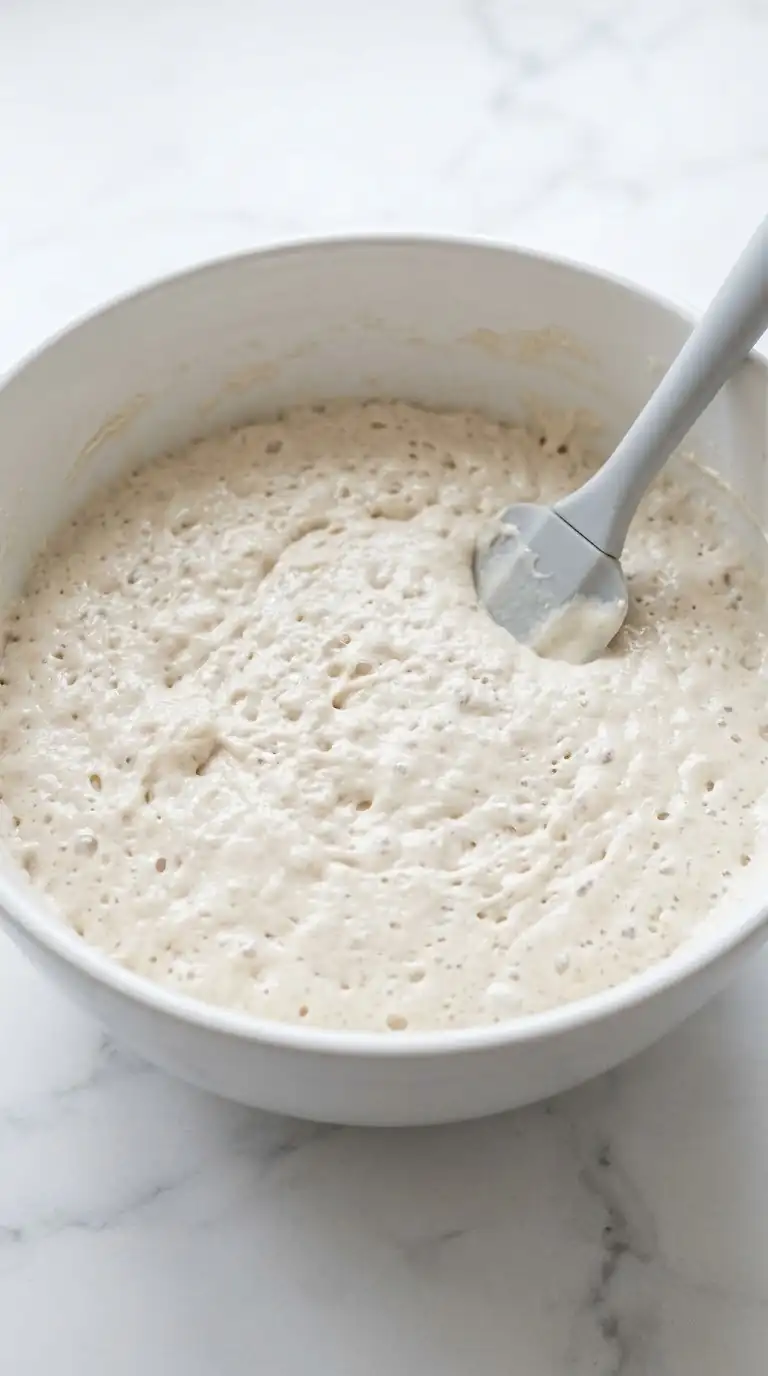
- Let the dough bulk ferment at room temperature for 8 to 10 hours or until it has doubled in size and looks bubbly.
- Dissolve the baking soda in the warm water and fold it into the fermented dough to neutralize excess acidity and help with the final rise.
- Turn the dough onto a surface dusted with cornmeal, gently pat to one-inch thickness, and cut into twelve circles using a round cutter.
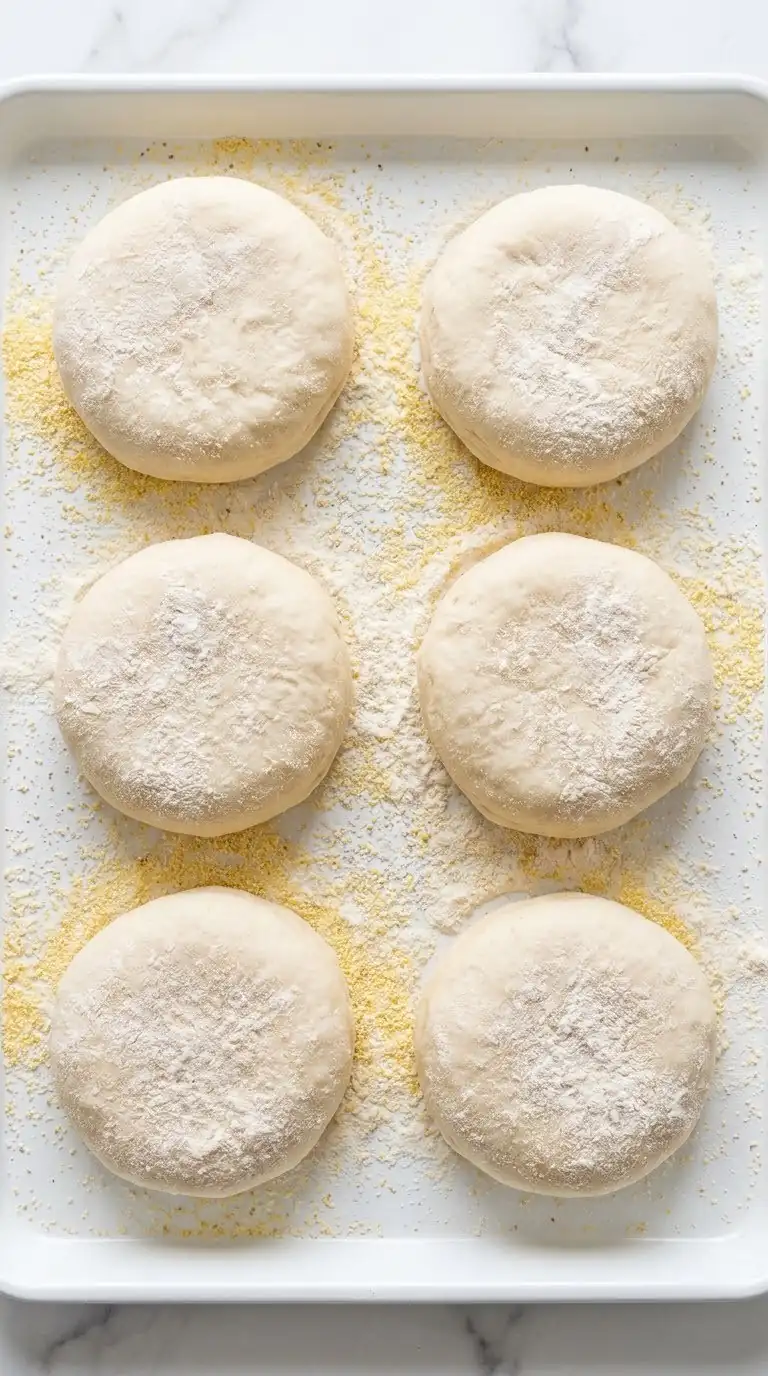
- Arrange the cut rounds on a parchment-lined tray dusted with more cornmeal and let them rest for another 30 to 45 minutes until they look slightly puffy.
- Heat a heavy-bottomed cast iron skillet over medium-low heat and cook the muffins for 6 to 8 minutes per side, monitoring the golden-brown color.
- Ensure the internal temperature reaches 200°F (93°C) to guarantee the centers are fully cooked through for that soft, airy interior.
- Cool the muffins completely on a wire rack before splitting them with a fork to maintain the signature airy crumb structure.
Recipe Variations
Customizing Your Sourdough Creations
Once you are comfortable with the baseline sourdough English muffin recipe, the possibilities for customization are vast. For a savory profile, incorporate fresh herbs such as finely chopped rosemary, thyme, or chives directly into the dough during the mixing phase. Adding two teaspoons of roasted garlic paste or a tablespoon of grated hard cheese like Parmesan can transform the muffins into the perfect vessel for a savory breakfast sandwich featuring eggs and greens. These inclusions benefit from the long rise, as the oils from the herbs infuse the dough, creating a more cohesive flavor profile in the final product.
Simple Homemade Sourdough English Muffins
Master the art of crafting sourdough english muffins in your own kitchen. This guide helps you create bakery-quality bread with signature texture.
Ingredients
Instructions
- In a large bowl, whisk together the active starter, warm milk, melted butter, and sugar until smooth to ensure even distribution of the yeast cultures.
- Add the flour and salt, stirring until a shaggy dough forms, then cover and let it rest for 30 minutes to hydrate the flour proteins.
- Perform a few sets of stretch-and-folds over the next two hours to build strength, which creates the structure needed for those beautiful nooks and crannies.
- Let the dough bulk ferment at room temperature for 8 to 10 hours or until it has doubled in size and looks bubbly.
- Dissolve the baking soda in the warm water and fold it into the fermented dough to neutralize excess acidity and help with the final rise.
- Turn the dough onto a surface dusted with cornmeal, gently pat to one-inch thickness, and cut into twelve circles using a round cutter.
- Arrange the cut rounds on a parchment-lined tray dusted with more cornmeal and let them rest for another 30 to 45 minutes until they look slightly puffy.
- Heat a heavy-bottomed cast iron skillet over medium-low heat and cook the muffins for 6 to 8 minutes per side, monitoring the golden-brown color.
- Ensure the internal temperature reaches 200°F (93°C) to guarantee the centers are fully cooked through for that soft, airy interior.
- Cool the muffins completely on a wire rack before splitting them with a fork to maintain the signature airy crumb structure.