Simple Homemade Sourdough English Muffins: Step-by-Step Instructions
If you prefer a sweeter start to your morning, consider adding two tablespoons of pure maple syrup or honey during the initial mix. Fold in a handful of dried currants, raisins, or chopped dried apricots during the final folds of the dough to create a muffin that toasts beautifully and pairs perfectly with a smear of cream cheese or fruit butter. You can also play with the flour composition to change the color and nutritional profile of your muffins. Replacing 20% of the bread flour with stone-ground whole wheat or rye flour introduces earthy, nutty notes and a darker, more rustic appearance. When using these heavier flours, you may need to increase the hydration slightly, as they absorb more water than refined white flour. Regardless of the add-ins, maintain the same proofing times and griddle temperatures to ensure the structural integrity remains intact. These variations allow you to tailor your batches to specific seasonal cravings while keeping the reliable sourdough process at the heart of your baking.
Serving Ideas
Elevating Your Sourdough English Muffin Experience
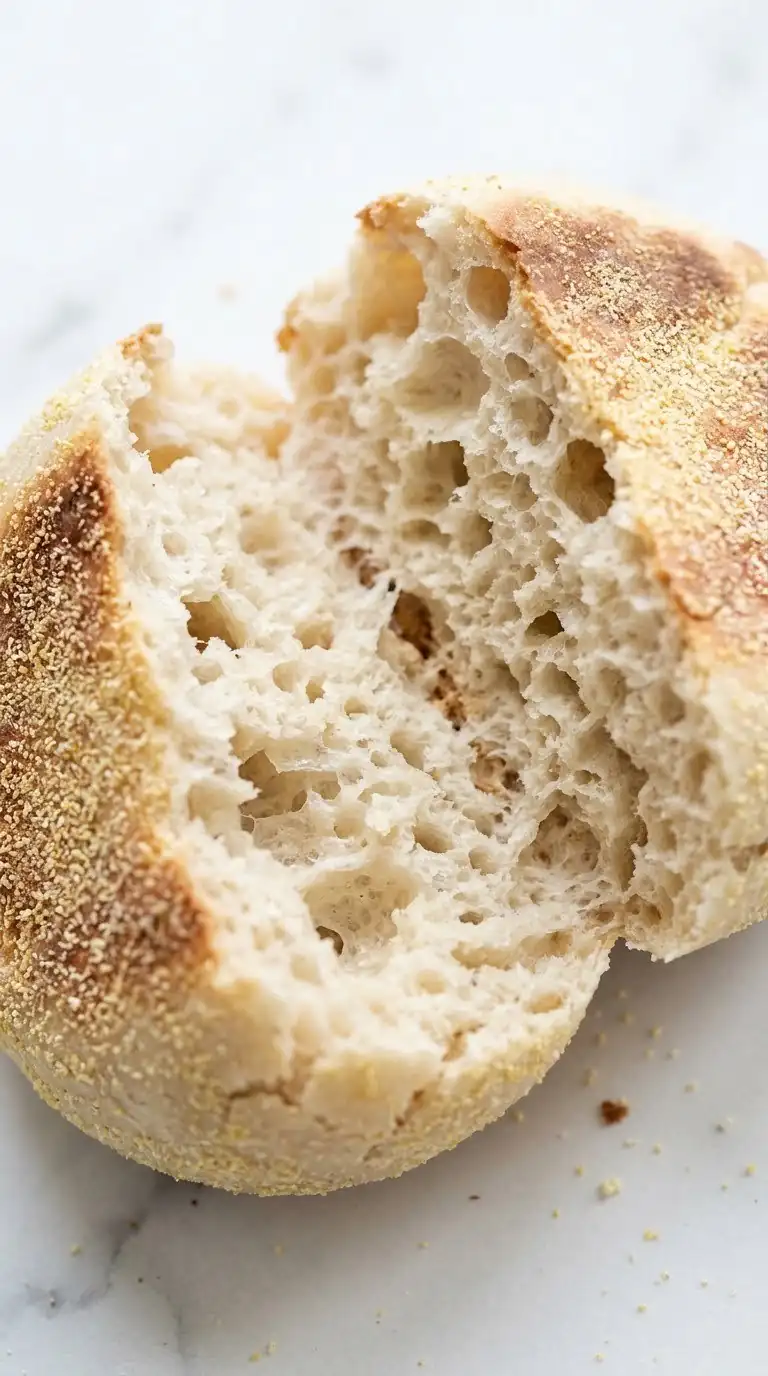
The true magic of a sourdough English muffin lies in its ability to bridge the gap between sweet and savory. To achieve the perfect texture, always split your muffins using a fork rather than a knife. By gently piercing the perimeter and prying the muffin apart, you preserve the internal nooks and crannies that define the classic style. Toast these halves in a cast-iron skillet over medium heat with a knob of unsalted butter until the edges are crispy and deep golden brown. This contrast between the crunchy exterior and the tender, airy interior is essential.
For a savory breakfast, layer a soft-scrambled egg with chives, a slice of sharp white cheddar, and a handful of peppery arugula. The natural acidity of the sourdough provides a perfect counterpoint to the richness of the yolk. If you prefer a sweet start, toast the muffin until very crisp and top with thick Greek yogurt, a drizzle of clover honey, and sliced strawberries or blackberries. The nooks will trap the honey, ensuring every bite is flavorful. For a more sophisticated snack, try spreading almond butter and topping it with a light dusting of cinnamon or thin slices of crisp apples. Because these muffins are dense enough to hold up to heavy toppings, they serve as an excellent vehicle for avocado smash, goat cheese with fig jam, or even as a base for an open-faced sandwich topped with smoked salmon and capers. The key is to toast them deeply; the heat caramelizes the natural sugars and enhances the complex fermentation notes of the dough.
Keeping It Fresh
Storing and Reviving Your Artisanal Muffins
Preserving the texture of your homemade sourdough English muffins requires careful attention to moisture control. Because these muffins lack preservatives, they are best consumed within three days of baking. Once they have fully cooled on a wire rack—typically after two hours—place them in a breathable paper bag for the first few hours to retain a crisp exterior. After they reach room temperature, move them to an airtight storage container or a sealed plastic bag. If you notice any condensation inside the bag, add a small paper towel to absorb excess humidity, which prevents the muffins from becoming gummy.
For long-term storage, freezing is the most effective method to maintain quality. Once the muffins are cooled, store them in a single layer on a baking sheet in the freezer for one hour, then transfer them to a freezer-safe bag. Removing as much air as possible before sealing is crucial to preventing ice crystals, which can degrade the dough structure. When you are ready to eat, there is no need to thaw them on the counter. Simply take a muffin directly from the freezer and place it into a toaster on a medium-low setting. This slow thaw allows the center to heat through without burning the exterior. Avoid microwaving, as this causes the starch to gelatinize, resulting in a rubbery, unpleasant texture that loses all the signature sourdough chew. If they become slightly dry after a few days, a quick brush of water before toasting can help restore a bit of moisture to the crumb.
For safe storage times, the USDA guidance on leftovers and food safety is a useful reference.
Reader Questions Answered
Can I make these english muffins without yeast?
Yes, this sourdough english muffin recipe relies entirely on the wild yeast in your sourdough starter. There is no commercial yeast added, making it a natural, leavened option.
How to make english muffins without yeast if I don't have a starter?
If you lack a starter, you would typically need a chemical leavener like baking powder. However, this specific sourdough english muffins recipe requires the fermentation process of the starter for the authentic flavor and texture.
Is an english muffin recipe yeast-based usually better?
Commercial yeast-based recipes are faster, but a sourdough approach develops deeper, complex flavors. The long fermentation also improves the digestibility of the flour.
What about an english muffin recipe fresh yeast vs instant yeast?
While some recipes use fresh or instant yeast, our sourdough approach replaces both with your active starter. This provides a traditional, artisanal quality that processed yeast simply cannot replicate.
Are there sourdough english muffins recipe in cups measurements?
Yes, we provide both volume and weight measurements for accuracy. Using a digital scale is always recommended for consistent results with sourdough baking.
Can I make a sourdough cinnamon raisin english muffin recipe?
Absolutely, you can modify the sourdough discard cinnamon raisin english muffin recipe by adding one-half cup of raisins and one tablespoon of cinnamon during the initial mixing phase.
More Muffin Recipes to Try
Wrapping Up
Refining Your Sourdough Craft
Baking sourdough English muffins is a rewarding ritual that connects you to the foundational principles of fermentation. Success in this recipe relies on managing your bulk fermentation and your griddle heat. Aim for a room temperature of 72°F to 75°F during the proofing stage; if your kitchen is colder, the process will take significantly longer, but you will be rewarded with a deeper, more developed flavor profile. Avoid rushing the final rise, as the air pockets inside the dough need time to stabilize before they hit the heat of the skillet. When cooking, keep your griddle at a steady 300°F to 325°F. If the heat is too high, the outside will burn before the interior is fully cooked, leaving you with a raw, doughy center.
- Monitor your starter activity: Use it at its peak, roughly four to six hours after feeding.
- Control the griddle: Use a heavy-bottomed pan to ensure even heat distribution.
- Patience is key: Let the dough rest after rolling and cutting to prevent shrinkage.
- Master the flip: Turn the muffins every 3-4 minutes to ensure a consistent, mahogany-brown crust.
By mastering the balance of hydration and proofing time, you move beyond mere recipe following and into true bread artistry. Every batch will teach you something new about how your flour and wild yeast interact in your specific environment. Do not be discouraged by a flat batch; even the less-than-perfect muffins provide an excellent lesson in fermentation. Embrace the process of folding, proofing, and griddling, and enjoy the satisfaction that comes with nourishing your household with high-quality, homemade bread.
Related recipes: Classic Homemade English Muffin for Eggs Benedict, English Muffin Pizza, English muffin calories, English muffin, Protein english muffins.
Learn more: Sourdough on Wikipedia · food storage & safety (FoodSafety.gov).
◆ ◆ ◆
← Back to Simple Homemade Sourdough English MuffinsGet new recipes
One tasty homemade recipe in your inbox each week. No spam, unsubscribe anytime.


Comments