Simple Homemade English Muffins Without Cornmeal
↓ Jump to Recipe
Learn how to make English muffins without cornmeal for a perfect breakfast. This guide ensures a soft, nooks-and-crannies texture every single time.
Making fresh English muffins without cornmeal is a rewarding way to elevate your morning routine. Many traditional recipes call for a dusting of cornmeal, but you can achieve an authentic texture without it by using a bit of extra flour or semolina. This process yields soft, chewy rounds that are ideal for toasting and topping with your favorite spreads. You will find that homemade dough has a depth of flavor that store-bought options simply cannot match. Follow this straightforward method to bring a bakery-quality experience into your own home kitchen.
Table of Contents
Table of Contents
Ingredients
- 4 cups (500g) bread flour
- 1.5 cups (350ml) warm water
- 2 teaspoons (7g) instant yeast
- 1 tablespoon (12g) granulated sugar
- 1.5 teaspoons (9g) kosher salt
- 3 tablespoons (42g) unsalted butter, softened
- 1/4 cup (30g) extra flour for dusting
- 1/2 teaspoon (2g) baking powder
- 1 tablespoon (15ml) neutral oil for griddle
- 1/4 cup (30g) rice flour for dusting (optional, prevents sticking)
To bake perfect English muffins without cornmeal, ensure your ingredients are fresh and at room temperature where noted. The quality of your bread flour is particularly important for achieving the right chewiness.
Essential Kitchen Tools
| Tool | Purpose |
| Cast Iron Skillet | Provides even heat distribution |
| Digital Scale | Precision for measuring flour |
| Bench Scraper | Easy portioning of dough |
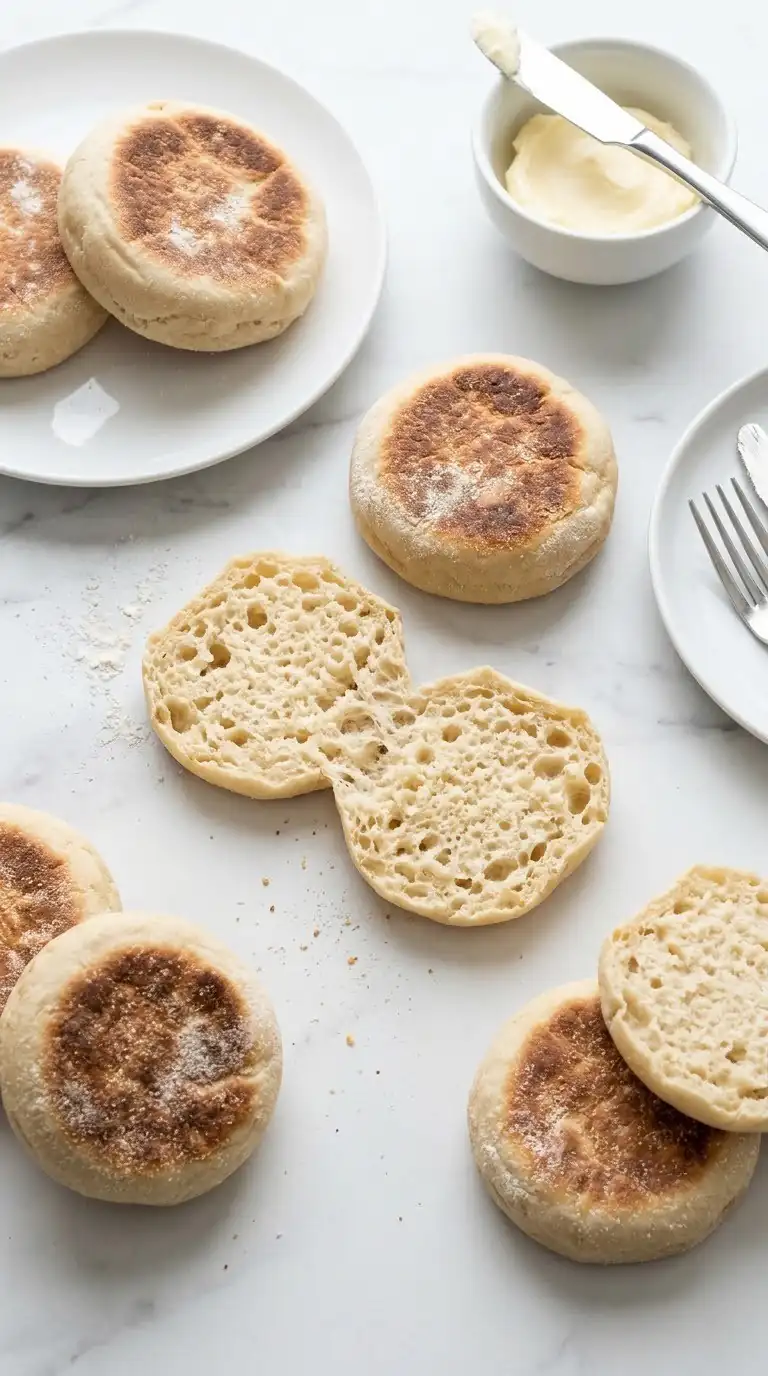
| Fork | Splitting the muffin properly |
Why This Recipe Works
The Science of the Perfect Crumb
Achieving that iconic, cratered interior without the use of cornmeal relies entirely on managing your hydration levels and fermentation timing. By keeping the dough at a high hydration—typically around 75% to 80%—the moisture turns into steam rapidly when the dough hits the hot griddle. This internal expansion is what creates the distinct network of holes. We avoid cornmeal by utilizing a cold-proof method, which strengthens the gluten structure sufficiently to hold these steam pockets without needing a coarse abrasive on the exterior.
The long, slow rise is the secret weapon for flavor depth. By placing your dough in the refrigerator for 12 to 24 hours, you slow down yeast activity, allowing enzymes to break down starches into simpler sugars. This creates a mild, tangy profile that mimics traditional sourdough without the complexity of maintaining a starter. You will notice that as the dough chills, the bubbles become smaller and more uniform, which leads to a more consistent crumb structure. When you finally form the dough into rounds, handle them gently. If you overwork the dough, you collapse those delicate gas bubbles that are essential for the finished texture. By maintaining this high-hydration environment and allowing for a patient fermentation, you ensure that every muffin is light, airy, and structurally sound enough to toast to perfection, providing that desirable crunch on the surface while maintaining a soft, pillowy center that holds up well against butter and jam.
Pro Tips for Better Results
Mastering the Griddle
- The Fork-Split Method: Never use a serrated knife to cut your muffins. A knife creates a smooth, flat surface that seals off the texture. By inserting a fork into the perimeter and gently prying the muffin apart, you create a jagged, high-surface-area landscape. These rugged peaks toast faster and provide deeper crevices for melting butter.
- Temperature Control: Heat management is the most common pitfall. Aim for a heavy-bottomed cast iron skillet preheated over medium-low heat. The internal temperature of the muffins should reach 200°F (93°C) to be considered fully baked. If the outside turns dark brown before the center is set, your heat is too high. Aim for about 6 to 8 minutes per side to achieve a deep golden color.
- Substitutes for Cornmeal: If you miss the crunch but hate the texture of cornmeal, use a light dusting of medium-grind semolina or white rice flour. These alternatives prevent the dough from sticking to your work surface and the skillet without altering the flavor profile. Rice flour, in particular, burns at a higher temperature than cornmeal, allowing for a cleaner cook.
- Avoid Deflation: After shaping your rounds, allow them a 20-minute rest on the counter before hitting the pan. This 'bench rest' lets the gluten relax, which prevents the muffins from springing back or becoming dense. If you cook them immediately after shaping, they will be tough and lack the necessary lift.
Nutrition Facts (per serving)
| Component | Amount |
| Calories | 185 kcal |
| Protein | 6g |
| Carbohydrates | 34g |
| Fat | 3g |
Figures are estimates; you can check individual ingredients in USDA FoodData Central.
Instructions
- In a large bowl, whisk together the bread flour, sugar, salt, and instant yeast to ensure even distribution.
- Add the warm water and softened butter to the dry ingredients, mixing until a shaggy dough forms.
- Knead the dough for about 8 to 10 minutes on a lightly floured surface until it becomes smooth and elastic, as this develops the gluten structure necessary for those iconic bubbles.
- Place the dough in a lightly oiled bowl, cover it with a warm damp cloth, and let it rise in a draft-free spot for 90 minutes or until doubled in size.
- Gently punch down the risen dough and divide it into 12 equal pieces, rolling each into a smooth, tight ball.
- Press the balls into flat discs about 3/4 inch thick, then place them on a parchment-lined tray to rise for another 45 minutes until they look puffy.
- Heat a heavy-bottomed cast iron skillet over medium-low heat and brush lightly with neutral oil.
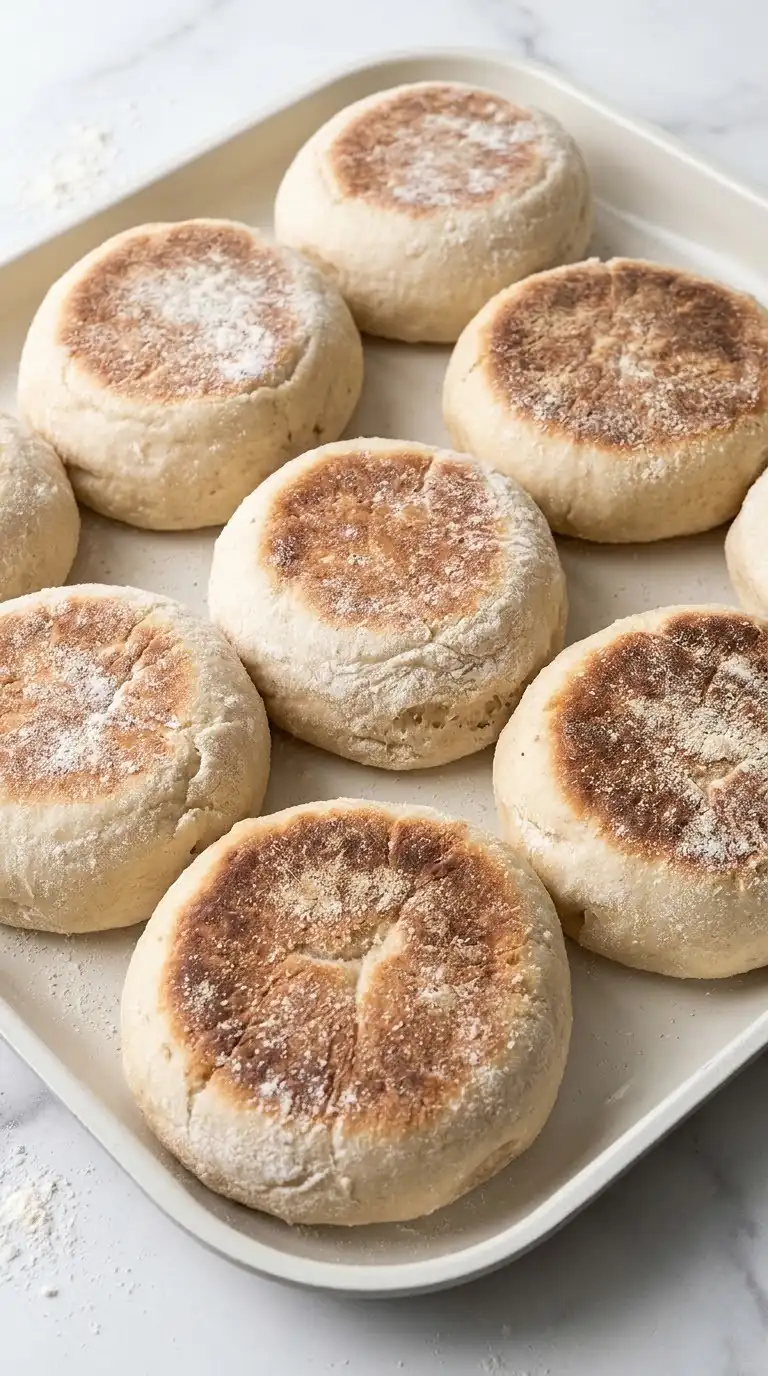
- Cook the muffins for 7 to 9 minutes per side, ensuring they achieve a deep golden brown color and the center reaches an internal temperature of 200°F (93°C).
- Remove the muffins from the pan and allow them to cool completely on a wire rack before splitting them open with a fork to maintain the desired interior texture.
Recipe Variations
Customizing Your English Muffins
While the classic buttery muffin is a staple, this base recipe is remarkably versatile. For a sophisticated savory profile, incorporate one tablespoon of finely minced fresh rosemary or thyme into the dry flour mixture. The oils in the fresh herbs infuse the dough during the long refrigerated rise, creating a fragrant crumb that pairs beautifully with savory egg dishes. If you prefer a lighter touch, a teaspoon of toasted sesame seeds or poppy seeds adds a delightful subtle crunch to the exterior crust without requiring any additional dusting agents.
For those who enjoy a touch of sweetness, incorporate one teaspoon of mild clover honey or maple syrup into the warm water before activating your yeast. This small addition provides the yeast with a quick energy boost, resulting in a faster, more active rise and a slightly darker, more caramelized exterior when grilled. You can also experiment with folding in a quarter-cup of dried fruit, such as currants or finely chopped cranberries, during the final fold of the dough before chilling. Keep in mind that heavy inclusions can weigh down the dough, so always ensure the pieces are small. If you want to lean into a breakfast-toast theme, adding a half-teaspoon of ground cinnamon to the flour creates a wonderful aromatic base that pairs perfectly with apple butter or cream cheese. Regardless of the add-ins, always monitor your griddle heat carefully; ingredients like honey or dried fruit increase the sugar content, which means the muffins will brown faster than the standard version, requiring closer attention to prevent burning.
Simple Homemade English Muffins Without Cornmeal
Learn how to make English muffins without cornmeal for a perfect breakfast. This guide ensures a soft, nooks-and-crannies texture every single time.
Ingredients
Instructions
- In a large bowl, whisk together the bread flour, sugar, salt, and instant yeast to ensure even distribution.
- Add the warm water and softened butter to the dry ingredients, mixing until a shaggy dough forms.
- Knead the dough for about 8 to 10 minutes on a lightly floured surface until it becomes smooth and elastic, as this develops the gluten structure necessary for those iconic bubbles.
- Place the dough in a lightly oiled bowl, cover it with a warm damp cloth, and let it rise in a draft-free spot for 90 minutes or until doubled in size.
- Gently punch down the risen dough and divide it into 12 equal pieces, rolling each into a smooth, tight ball.
- Press the balls into flat discs about 3/4 inch thick, then place them on a parchment-lined tray to rise for another 45 minutes until they look puffy.
- Heat a heavy-bottomed cast iron skillet over medium-low heat and brush lightly with neutral oil.
- Cook the muffins for 7 to 9 minutes per side, ensuring they achieve a deep golden brown color and the center reaches an internal temperature of 200°F (93°C).
- Remove the muffins from the pan and allow them to cool completely on a wire rack before splitting them open with a fork to maintain the desired interior texture.